How Valencia became Europe’s most attractive base for digital professionals
For years, the digital nomad trail followed a predictable path: the humid cafés of Canggu, the hilly cobblestones of Lisbon, or the bustling streets of Barcelona.
As we move through 2026, that trail has shifted.
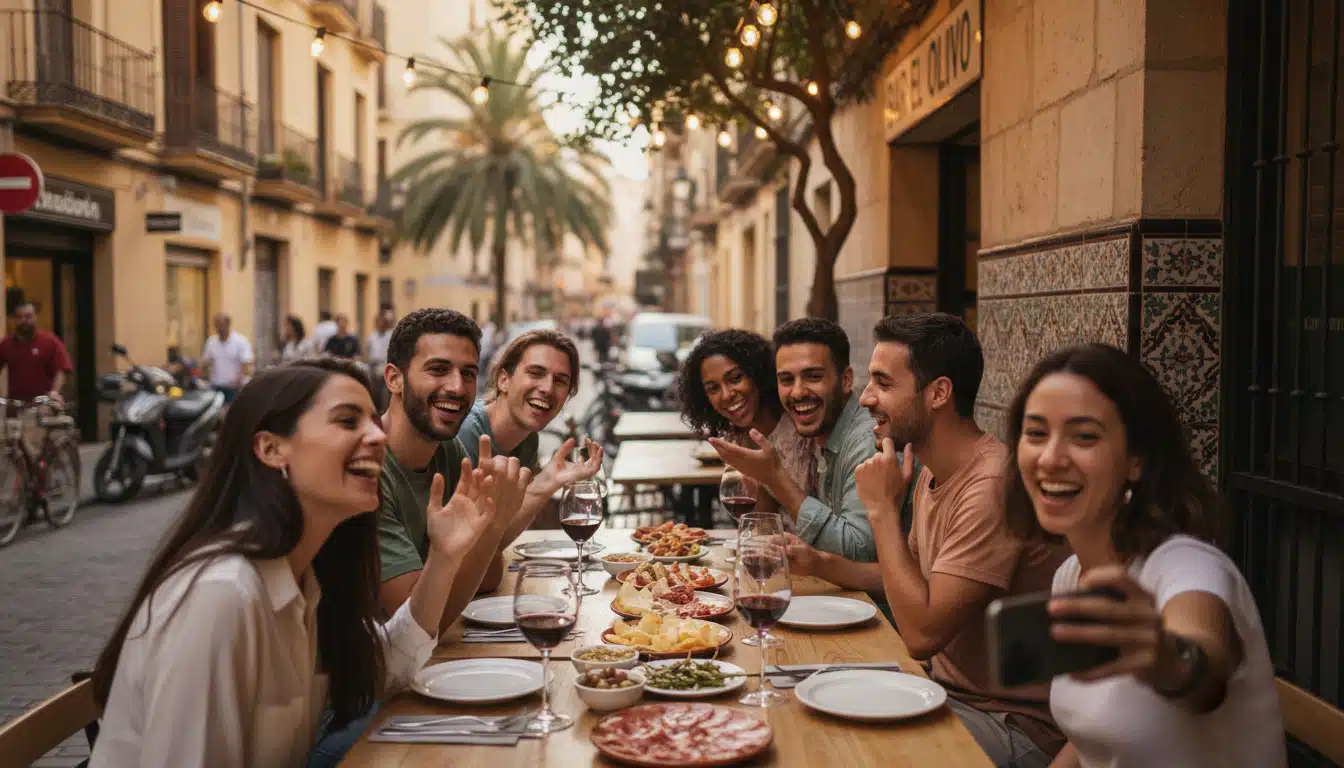
Valencia digital nomads are no longer a niche group of early adopters — they represent a movement that prioritises a high-functioning European city over a tourist hub.
Why Valencia beats Lisbon, Barcelona, and Bali in 2026
Valencia wins on balance.
Lisbon grapples with a severe housing crisis and infrastructure strain.
Bali faces increasing traffic congestion and environmental concerns.
Barcelona has seen anti-tourism sentiment push remote workers to the margins.
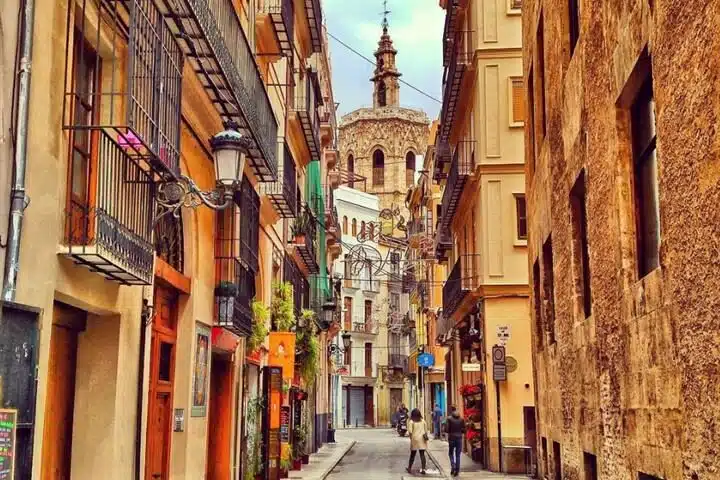
Valencia has managed to scale its appeal without losing its identity.
It offers high-speed fibre-optic connectivity, a price point well below Madrid or Barcelona, and a Mediterranean quality of life that is difficult to replicate elsewhere in Europe.
Turia Park provides nine kilometres of green space running through the city centre.
300 days of sunshine per year is not a marketing figure — it is an accurate meteorological average recorded by Spain’s national weather agency, AEMET.
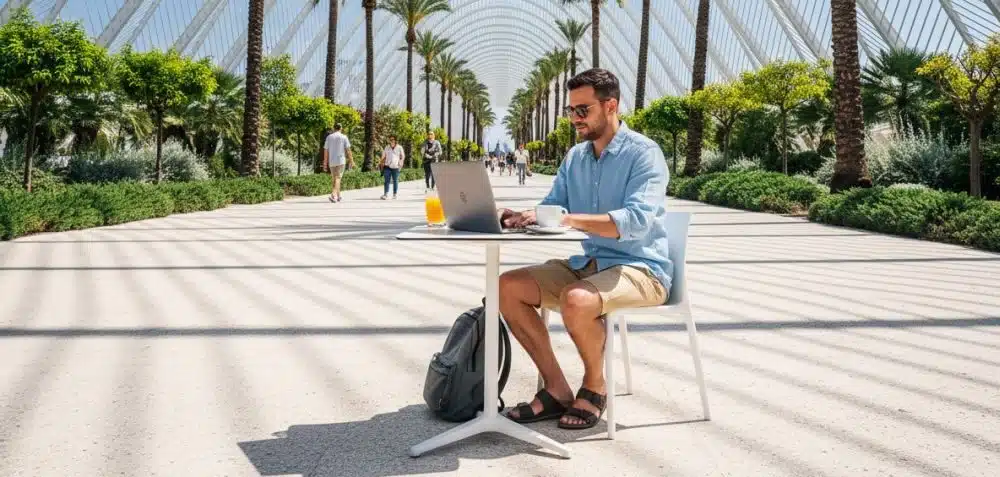
For those combining professional output with a sustainable pace of life, Valencia for remote workers and digital nomads has become a reference point in European nomad culture.
Spanish Digital Nomad Visa: what you need to know in 2026
Spain’s Digital Nomad Visa (DNV), introduced under the Ley de Startups (Law 28/2022), has become more streamlined since its launch.
It allows non-EU nationals to live and work in Spain for up to five years, provided income derives from companies or clients based outside Spain.
Core eligibility requirements
- Employment proof: A minimum of three months working for your current employer or freelance clients prior to application.
- Income threshold: At least 200% of the Spanish Minimum Wage (SMI). In 2026, this sits at approximately €2,600–€2,800 per month for the main applicant.
- Qualifications: A degree from an accredited university or a minimum of three years of documented professional experience in your field.
- Criminal record certificate: Required from every country of residence in the past two to five years.
Application routes
Applications can be submitted via the Spanish Consulate in your home country or from within Spain during the first 30 days of arrival on a Schengen tourist entry.
Applying from within Spain typically grants a three-year residency permit immediately.
Applying from abroad usually results in a one-year visa requiring later conversion to a TIE (Tarjeta de Identidad de Extranjero).
Many Valencia digital nomads use specialist immigration and relocation services to manage the Cita Previa appointment system and NIE registration, allowing them to focus on client work rather than administrative queues.
If you are considering a formal business presence in Spain, it is worth reading about business registration in Valencia before committing to a structure.
Cost of living versus quality of life: the Valencia calculation
Valencia remains significantly more affordable than London, Paris, Amsterdam, or Madrid — while offering comparable infrastructure and superior climate.
For a detailed breakdown of current figures, the Valencia living expenses guide covers rent, utilities, transport, and food costs with current data.
Monthly cost estimates for digital nomads (2026)
| Category | Estimated monthly cost |
|---|---|
| Rent — 1-bedroom, prime area | €900 – €1,300 |
| Coworking membership | €150 – €250 |
| Groceries and local markets | €300 – €400 |
| Dining out, including menú del día | €300 – €400 |
| Public transport and Valenbisi | €40 |
A comfortable life in Valencia — with fresh food from the Mercado Central, a coworking membership, and regular meals out — costs most nomads between €2,000 and €2,500 per month.
Infrastructure and time zone advantages
Spain ranks among Europe’s top countries for fibre-optic coverage, according to data from the European Commission’s Digital Economy and Society Index (DESI).
In Valencia, 1Gbps symmetrical speeds are standard across most residential and coworking locations, whether in a converted flat in Ruzafa or a hub in the Marina.
For those working with US East Coast clients, a six-hour time difference allows a productive morning of uninterrupted deep work before North American business hours begin.
Top coworking spaces for Valencia digital nomads in 2026
Valencia’s coworking sector has matured well beyond hot-desking.
Consider the following spaces:
- Wayco (Ruzafa and Abastos): Architecturally distinctive spaces with an active community, on-site café, and consistent membership base drawn from both local professionals and international nomads.
- Vortex Coworking (Playa and Centro): Popular with developers and creative agencies. Beachside location suits those who want to combine sea access with a technical working environment.
- Garage Coworking: Industrial aesthetic with dedicated quiet zones. Well suited to focused, long-session working days.
- Grow Working: Modern facilities near Estació del Nord with strong meeting room provision and ergonomic setups designed for extended stays.
- Orange Lab: A smaller, community-focused space oriented towards sustainability and creative collaboration.
- International Hub Valencia: Specifically designed for newly arrived nomads, providing professional infrastructure alongside local integration support.
Best neighbourhoods for digital nomads in Valencia
Where you live in Valencia shapes your daily experience significantly.
Each district has a distinct demographic, price point, and atmosphere.
Ruzafa
Valencia’s most internationally recognised creative district.
Ruzafa is dense with independent cafés, galleries, and a diverse professional population.
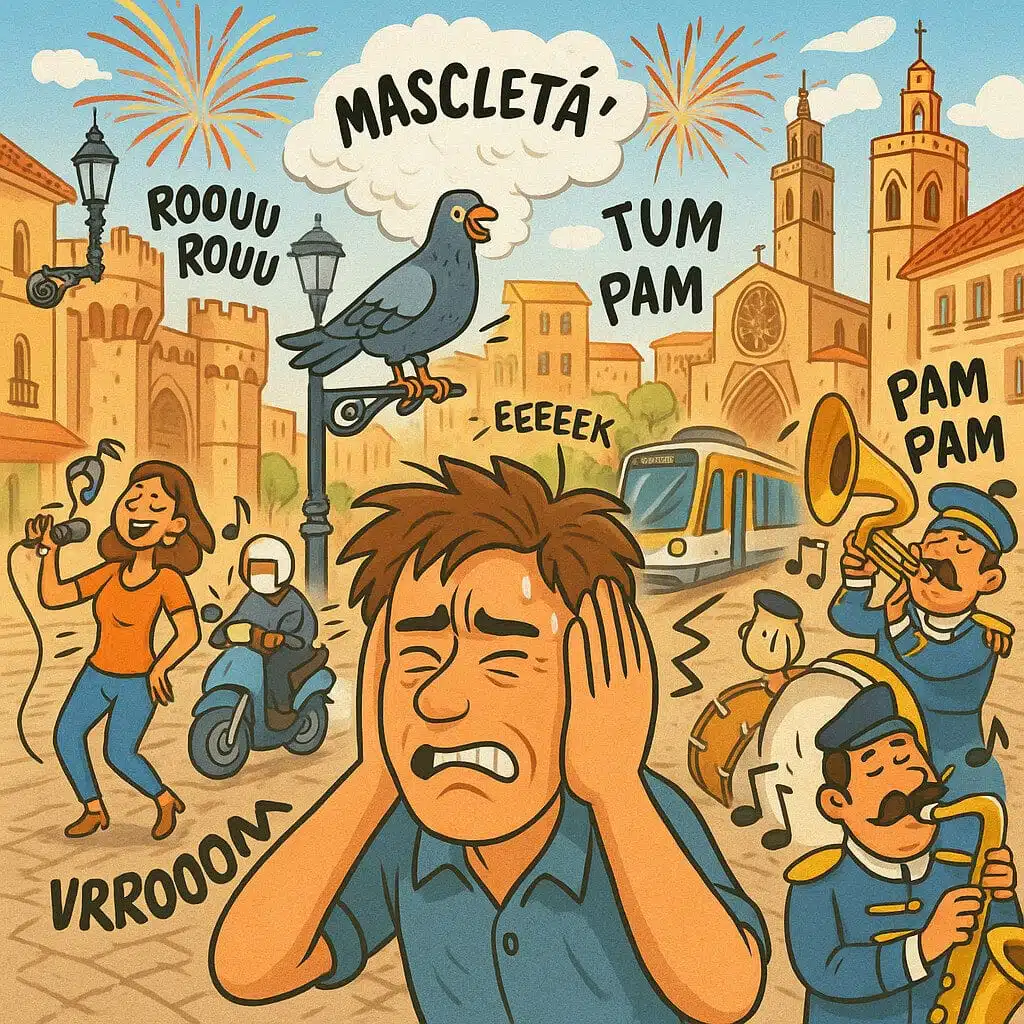
It is central, walkable, and socially active — though noise levels during festival periods are worth factoring in before signing a lease.
For an honest account of what that sounds like, Valencia: 50 shades of noise covers the acoustic reality of city living here.
Benimaclet
A former village absorbed into the city that has retained its community character.
Popular with long-term residents, university students, and nomads who prefer an authentic neighbourhood feel over proximity to tourist infrastructure.
Prices remain lower than Ruzafa, and the pedestrian network is well developed.
El Cabanyal and La Marina
Valencia’s historic fishing quarter is now home to a growing tech and startup ecosystem, anchored by the Marina de Valencia.
Accelerators, coworking spaces, and networking events are concentrated here, making it a practical base for founders and product professionals.
A morning swim before a working day is genuinely achievable from this location.
For a full comparison of districts by professional profile and commute, read the guide to choosing the best neighbourhoods for professionals in Valencia.
Practical considerations: accommodation, healthcare, and tax
Finding accommodation as a new arrival
Valencia’s rental market moves quickly.
A two-stage strategy works best in 2026: a coliving space or serviced apartment for the first month, followed by a standard long-term Contrato de Arrendamiento once you have established local references.
Landlords typically require proof of income, a fianza (security deposit) of one to two months, and occasionally a aval bancario (bank guarantee) for non-residents.
Settling-in services offered by relocation specialists can help bypass the informal “locals only” barriers that many nomads encounter in their first weeks.
For a realistic view of what apartment living involves, living in a flat in Valencia: a pragmatic overview covers the details most guides omit.
Healthcare
Private health insurance is a mandatory requirement for the Digital Nomad Visa.
Once registered as a Spanish tax resident — either as an autónomo (self-employed) or through an employer — access to Spain’s public health system, the Sistema Nacional de Salud, follows automatically via social security contributions.
Many long-term residents maintain a private policy with providers such as Sanitas or Adeslas for faster specialist access, typically at €50–€100 per month.
Tax: the Beckham Law
Eligible new residents can apply for Spain’s special tax regime under Article 93 of the IRPF (Personal Income Tax Law), commonly referred to as the Beckham Law.
Under this regime, Spanish-sourced income is taxed at a flat rate of 24% for up to six years, rather than the progressive scale, which can reach significantly higher rates.
Consulting a registered asesor fiscal (tax adviser) before establishing residency is essential to ensure eligibility and compliance with the AEAT (Agencia Estatal de Administración Tributaria).
It is also worth noting that EEAT — Google’s quality framework of Experience, Expertise, Authoritativeness, and Trustworthiness — and AEAT are two entirely different things, though the abbreviations have caused genuine confusion in more than one SEO audit.
Real profiles: who is moving to Valencia in 2026
Marco, 34 — senior engineer, Italy/USA
Marco relocated from San Francisco to Valencia while continuing to work for a US-based technology firm.
“I still work the same job, but my quality of life has changed completely. I live in Gran Via, cycle the Turia every morning, and I sleep properly. Valencia doesn’t reward burnout — it rewards balance.”
Sarah, 28 — freelance content strategist, UK
“The Digital Nomad Visa process was more complex than I anticipated. I used a relocation service for the paperwork and it was one of the best decisions I made. I now split my week between a café in El Carmen and client calls. The community here is real — I’ve met people who have become close friends.”
Elena, 41 — startup founder, Germany
“Valencia made commercial sense for us. Lower overheads, access to university graduates, and the Marina ecosystem meant we could build seriously without the costs of a capital city. Productivity has actually improved since relocating the team.”
Challenges to expect before you commit
Valencia rewards preparation.
Spanish language skills are not optional for anyone planning to stay beyond three months.
Administration, healthcare visits, and landlord relationships all require at least conversational Spanish.
Valenciano — the regional co-official language — appears on signage and occasionally in official correspondence, though Spanish is always accepted.
Appointment availability across government services — from NIE registration to healthcare referrals — can be extremely limited.
Arriving with a Cita Previa strategy, or a relocation contact who can manage this, significantly reduces early frustration.
July and August bring heat and tourist volume that many nomads find counterproductive.
A flexible working arrangement that allows travel during peak summer months makes the annual cycle considerably more comfortable.
Understanding work-life balance in Valencia helps set realistic expectations before arrival.
How to test Valencia: a 1–3 month strategy
A test period before committing to a visa application is almost always worth it.
Valencia is well structured for this approach.
- Month one: Book into a coliving space such as Coliving Valencia or Anyplace. Instant community, no utility setup, and reliable Wi-Fi removes early-stage friction.
- Month two: Move to a short-term rental in a district that suited you during month one. Attend local meetups — Meetup.com and the Valencia Digital Nomads community on Facebook list events weekly.
- Month three: If you want to stay, begin the Digital Nomad Visa process. Engage an immigration specialist before your 90-day Schengen window closes.
Understanding how the city’s transport network connects districts matters more than most nomads realise before arriving — the Valencia public transportation guide covers metro, bus, and Valenbisi in practical terms.
For a broader view of what day-to-day life actually involves, what it means to live in Valencia covers the realities beyond the highlights.
For those who want the full picture — not just the appeal — Valencia: the not so perfect Mediterranean paradise provides an honest counterbalance.
Ready to assess your options?
Request a tailored assessment of your international move or discuss your remote working setup with a specialist who works across multilingual markets.
Frequently asked questions
Is Valencia safe for solo digital nomads?
Valencia consistently ranks among the safest cities in Europe.
Violent crime is rare, and most neighbourhoods are considered safe to navigate on foot at night.
Petty theft occurs in concentrated tourist zones — the same precautions that apply in any major European city apply here.
How fast is the internet in Valencia?
Spain ranks in the top three EU countries for fibre-optic coverage.
Most residential and coworking locations in Valencia offer symmetrical speeds of 600Mbps to 1Gbps.
5G coverage is extensive across the city centre and beachfront areas.
Do I need Spanish to live in Valencia?
English is sufficient within nomad and expat networks, and is increasingly used in coworking and hospitality contexts.
For administrative tasks — visa appointments, healthcare, banking, and tenancy agreements — functional Spanish is necessary.
Anyone staying longer than three months will find that investing in Spanish improves both daily practicality and integration with local professional networks.
For broader context on the expat experience, Valencia expat life covers what long-term residents have learned.
What is the best time of year to relocate to Valencia?
Spring (March–May) and autumn (September–November) offer the most practical conditions for a new arrival.
Weather is moderate, rental enquiries face less competition than in summer, and the city operates at a normal pace.
Arriving in March means encountering Las Fallas — a week-long city-wide festival involving significant noise and fireworks.
Whether that is a welcome introduction or an overwhelming start depends entirely on the individual.
Are there professional networking events for Valencia digital nomads?
Yes.
Events run regularly across tech meetups at the Marina, language exchange sessions (intercambios) in Ruzafa, and nomad-specific coffee mornings and industry gatherings.
The community is well organised and actively maintained by both local residents and long-term nomads.
Beyond professional networks, essential things to do in cultural Valencia offers context on the city beyond the coworking space.