Valencia public transportation, the way I actually use it
I have lived in Valencia for over a decade and barely drive inside the city. I have never once regretted that.
Most of the tourist guides describe Valencia public transportation as if it were a museum exhibit. Useful information, no flavour. What follows is the honest, lived-in version: what works, what to skip, and how I actually move around as a resident.
Metrovalencia: the workhorse
Six metro lines plus three tram lines run by Metrovalencia. The network covers the city centre, the beaches at Cabanyal and Malvarrosa, the airport, and most of the residential neighbourhoods worth living in.
What I use almost daily:
- Lines 3 and 5 connect the city centre to the airport directly. About 25 minutes from Xàtiva to Aeroport. No need to think about taxis for flights.
- Line 5 runs east to Marítim and the beach. Tram from there onwards.
- Tram line 4 from the centre out to Cabanyal beach in summer. Slower than the metro, more pleasant.
Frequencies are decent, ten to fifteen minutes off-peak, six to eight at rush hour. Trains are clean and air-conditioned. Current fares and zones are on the Metrovalencia official site. For a detailed ticket-by-ticket breakdown in French, see the Valencia Metro tickets guide 2026 on my sister site Valenciamove.
EMT buses: the dense urban grid
EMT Valencia runs the city bus network. Coverage is denser than the metro for inner-city movement, and faster than walking once you learn the routes that matter for your neighbourhood.
The night buses are surprisingly civilised compared to most Spanish cities. If you are out late in El Carmen or Ruzafa and the metro has stopped, the N-lines will get you home.
Get the EMT app. The route planning saves time and the live arrival data is accurate.
Valenbisi: the secret weapon
The bike-share network is genuinely excellent. Around 280 stations, decent coverage of the residential ring around the centre, and an annual subscription that pays for itself in roughly three weeks of normal use.
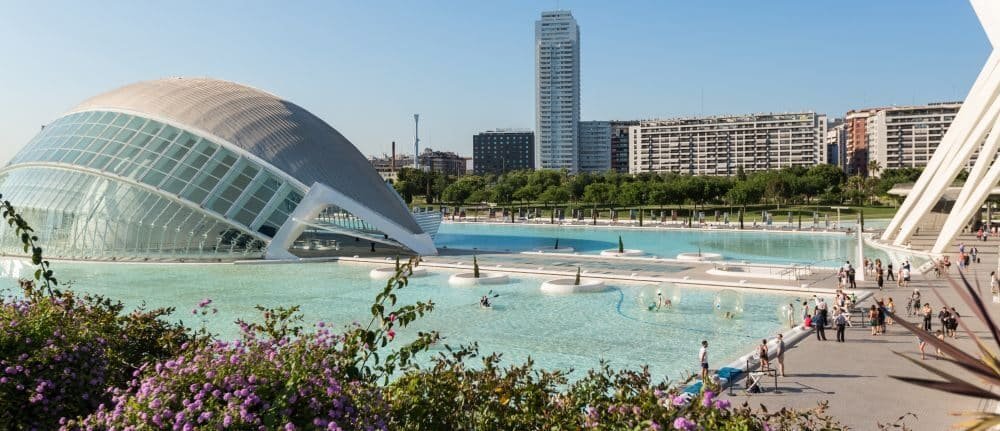
What makes it work: the Turia gardens. The dry riverbed running through the city is a nine-kilometre car-free park with a continuous bike path. From the Bioparc in the west to the Ciutat de les Arts in the east, no traffic lights, no cars.
Cycling Valencia in March and October is one of the genuine pleasures of the city.
Cercanías: when you need to leave the city
The regional rail network is the part most expats discover late.
- Line C-1 south to Cullera and Gandia. Beach day with no parking stress.
- Line C-5 north to Sagunto. Roman amphitheatre, good seafood, half the tourists of the centre.
- Line C-3 west to Buñol if you need a tomato fight every August.
From there, AVE high-speed rail puts Madrid at 1h45, Barcelona at around 3h. I have not driven those routes in years.
Where having a car still earns its keep
I do drive. Almost never inside the city, but the car earns its keep on weekends, for the surroundings.
- The interior villages like Bocairent, Montanejos, or Requena for day trips.
- The Albufera Natural Park at sunset, where Bus 25 timing is awkward.
- The Costa Blanca beaches south of Cullera, and the Sierra Calderona north of the city, for weekend escapes.
- Bulky shopping runs that do not fit a Valenbisi front basket.
Inside the centre I have not parked in months. Cabify covers the late-night returns and is roughly 30% cheaper than central European equivalents. Standard taxis work fine and accept card without the arguments of a few years back.
A practical week-one checklist
If you are moving to Valencia, the order I would recommend:
- Day one: buy a TuiN card at any metro station. Refillable, works on metro, tram, and bus.
- Week one: download the EMT and Metrovalencia apps. The English versions work properly.
- Week two: set up Valenbisi annual. Requires a Spanish bank card, which is part of the broader setup process.
- Month one: try Cercanías for a beach day. Once you do, the car-rental habit usually fades.
If you want a relocation hand from someone who lives here
Public transit is one of the smaller pieces of moving here, but it shapes how you choose a neighbourhood. The neighbourhoods worth living in all sit close to a metro line for a reason.
If you are weighing a Valencia move and want a local view on transit, neighbourhoods, schools, or bureaucracy, get in touch.