Living in Valencia as an expat: economy, costs, and neighbourhood guide
Economic strength of Valencia
Valencia sits at the centre of Spain’s fourth-largest regional economy.
The Valencian Community contributes 9.3% of Spain’s total GDP, with CaixaBank Research estimating regional growth of 3.0% in 2024.
BBVA Research projects even stronger momentum, forecasting 3.6% GDP growth in 2025, placing the Valencian Community at the top of Spain’s regional growth rankings.
Key sectors driving the regional economy include trade, tourism, education, hospitality, financial services, and manufacturing.
Exports of goods and services exceed 25% of regional GDP, with over 22,000 companies forming the export base, according to Invest Valencia.
Employment figures reflect this strength.
Social Security affiliations rose 2.6% in 2024, outperforming the national average of 2.4%.
By May 2025, year-on-year employment growth reached 2.9%, compared to 2.2% nationally.
| Key economic indicators | Figures |
|---|---|
| Share of Spain’s GDP | 9.3% |
| Regional population | 5.41 million (2024) |
| GDP growth forecast 2025 | 2.5% (CaixaBank) to 3.6% (BBVA) |
| Employment growth (May 2025, y-o-y) | 2.9% |
| Foreign residents in the Valencian Community | Approximately 970,000 |
Recovery from the October 2024 DANA floods has been faster than anticipated, supported by EU-funded reconstruction investment.
For professionals considering a career move or business relocation, these figures provide a practical foundation for planning ahead.
Diversity and job opportunities
Almost 970,000 foreign nationals now live in the Valencian Community, making it Spain’s third-largest region for international residents behind Catalonia and Madrid.
Within Valencia city itself, foreign nationals represent around 18.5% of the population, according to the Council of Europe’s Intercultural Cities programme.
INE migration data for 2024 confirms the Comunitat Valenciana recorded 104,776 net external migrants, the third-highest figure in Spain.
Job opportunities cluster around several core sectors:
- Trade and logistics
- Tourism and hospitality
- Education and language services
- Financial services
- Manufacturing and industrial production
- Technology and startups
Valencia’s startup scene has grown considerably over the past five years, supported by coworking infrastructure and lower operating costs compared to Madrid or Barcelona.
Speaking Spanish remains the strongest advantage for networking and securing local employment.
EU citizens face no visa requirements and need only register for an NIE (Número de Identificación de Extranjero) to live and work here.
Non-EU nationals should explore Spain’s digital nomad visa, which has made Valencia increasingly attractive for remote workers.
A detailed breakdown of monthly expenses is available in the Valencia living expenses guide.
Financial overview
Understanding salary expectations and daily costs is fundamental to planning an expat move.
Valencia offers a distinctive balance: lower salaries than Madrid or Barcelona, offset by significantly lower living costs.
Salary expectations
Spain’s national average gross salary reached approximately €31,600 per year in 2025, according to INE estimates.
Valencia sits slightly below this average.
The average gross salary in the Valencian Community is approximately €2,050 per month, with a net take-home figure typically landing between €1,300 and €1,500 after taxes and social contributions.
Professionals in technology, engineering, or international business can expect significantly higher figures, often reaching €2,500 to €3,500 net per month.
Spain’s minimum wage for 2025 stands at €1,184 gross per month (14 payments), or €16,576 annually.
| Sector | Estimated gross annual salary (€) |
|---|---|
| Hospitality | 18,000 – 22,000 |
| Education and language services | 20,000 – 26,000 |
| Manufacturing | 22,000 – 28,000 |
| Technology and engineering | 30,000 – 45,000 |
| Finance and consulting | 28,000 – 40,000 |
Remote workers earning international salaries find Valencia particularly appealing, stretching purchasing power far beyond what Madrid, Barcelona, or most Northern European cities offer.
Cost of living
Valencia consistently ranks among the most affordable major cities in Western Europe.
Numbeo data from late 2025 places it 7th globally for quality of life, largely driven by the ratio between cost of living and purchasing power.
According to Idealista’s October 2025 report, average rent in the Valencia province sits at approximately €15.50 per square metre, meaning an 80 m² apartment typically costs around €1,240 per month.
Central neighbourhoods like Ruzafa and El Carmen command higher rates, often exceeding €18 per square metre.
| Expense category | Monthly cost: single person (€) | Monthly cost: family of four (€) |
|---|---|---|
| Rent (city centre, 1-2 bed) | 800 – 1,200 | 1,200 – 1,800 |
| Groceries | 200 – 300 | 500 – 700 |
| Utilities (electricity, gas, water) | 75 – 120 | 130 – 180 |
| Public transport | 17.50 (subsidised SUMA pass) | 70 (two adults) |
| Internet (600 Mbps fibre) | 30 – 45 | 30 – 45 |
| Leisure and dining | 150 – 250 | 250 – 400 |
A single person can live comfortably on approximately €1,500 per month including rent.
A family of four should budget around €3,000 to €3,500 for a relaxed Mediterranean lifestyle.
Compared to Barcelona, Valencia offers approximately 30-40% savings across rent, dining, and daily expenses.
Compared to Madrid, the saving sits at roughly 25-35%.
For a full cost breakdown, see the Valencia living expenses guide.
Neighbourhood guide for expats
Popular expat areas
Choosing the right neighbourhood shapes the entire expat experience.
Valencia’s compact layout means most districts sit within 25 minutes of the centre by metro, tram, or bicycle.
Ruzafa
Ruzafa attracts digital nomads, freelancers, and young professionals drawn to its density of coworking spaces, independent cafés, and cultural events.
Nightlife here runs deep, and the restaurant scene covers everything from traditional Valencian cuisine to international street food.
Expect higher rents: one-bedroom apartments typically range from €900 to €1,300 per month.
| Feature | Details |
|---|---|
| Profile | Creative, social, walkable |
| Rent (1-bed) | €900 – €1,300 |
| Public transport | Metro, bus, and bike lanes |
| Coworking spaces | Multiple options |
La Gran Via (Cánovas)
Cánovas offers wider boulevards, larger apartments, and a slightly more polished atmosphere than Ruzafa.
Families and mid-career professionals favour this area for its proximity to international shops, cultural venues, and green spaces.
Rents sit at the higher end of the Valencia scale.
| Feature | Details |
|---|---|
| Profile | Upscale, central, well-connected |
| Rent (2-bed) | €1,200 – €2,000 |
| Cultural events | Frequent |
Cabañal and Canyamelar
Located near the port and marina, these traditionally working-class neighbourhoods blend old fishermen’s cottages with renovated modern apartments.
Rents remain lower than in the city centre, and the growing number of coworking spaces makes this area popular with remote workers on tighter budgets.
Supermarkets, local markets, and schools are all within walking distance.
| Feature | Details |
|---|---|
| Profile | Coastal, affordable, evolving |
| Rent (1-bed) | €600 – €1,000 |
| Coworking spaces | Growing |
Monteolivete
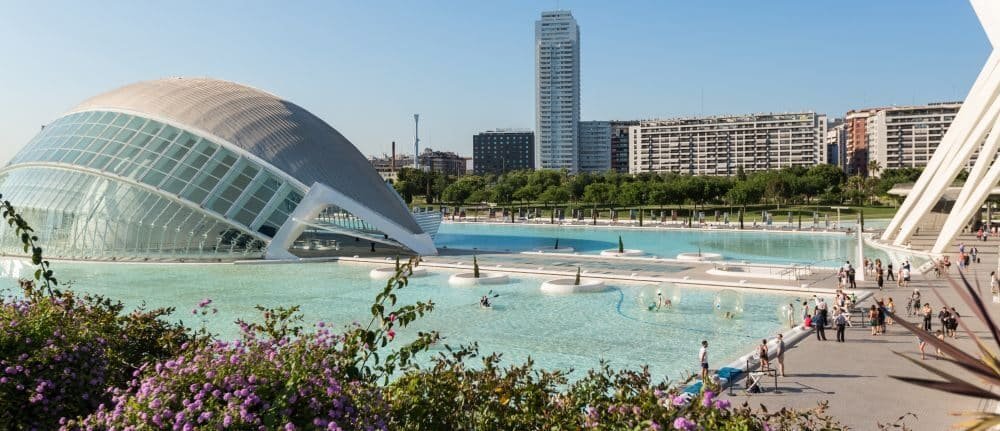
Adjacent to Ruzafa but noticeably quieter, Monteolivete suits families looking for a residential feel with easy access to the City of Arts and Sciences.
Grocery stores, schools, and parks are all within a short walk.
| Feature | Details |
|---|---|
| Profile | Family-friendly, residential, calm |
| Rent (2-3 bed) | €800 – €1,500 |
| Proximity to attractions | City of Arts and Sciences |
Malvarrosa
For those prioritising beach access, Malvarrosa delivers coastal living within easy reach of the city centre.
Sandy beaches, seafront restaurants, and a laid-back pace define the daily rhythm here.
Coastal homes carry a 20-30% premium over inland equivalents.
| Feature | Details |
|---|---|
| Profile | Beachfront, relaxed, well-connected |
| Rent (1-bed) | €700 – €1,200 |
| Beach access | Direct |
A deeper look at selecting the right area is available in the best neighbourhoods for professionals guide.
Residential options
Valencia’s housing market caters to a wide range of budgets and preferences.
Most expats begin with a long-term rental through platforms like Idealista, Fotocasa, or Pisos.com.
Agency fees typically amount to one month’s rent.
Landlords often require proof of a Spanish work contract or three to six months’ rent upfront from tenants without one.
| Area | Property type | Approximate monthly rent (€) |
|---|---|---|
| Ruzafa | Modern apartment, 1-2 bed | 900 – 1,300 |
| La Gran Via (Cánovas) | Spacious apartment, 2-3 bed | 1,200 – 2,000 |
| Cabañal | Traditional or renovated, 1-2 bed | 600 – 1,000 |
| Malvarrosa | Coastal apartment or house | 700 – 1,200 |
| Monteolivete | Family home, 2-3 bed | 800 – 1,500 |
Detailed information on flat living in Valencia covers what to expect from the rental process and day-to-day apartment life.
Lifestyle in Valencia
Climate and health
Valencia receives approximately 2,696 hours of sunlight per year, with an average annual temperature of 19°C.
Winters are mild; summers are warm but tempered by coastal breezes.
| Season | Average temperature range (°C) |
|---|---|
| Winter | 8 – 17 |
| Spring | 12 – 22 |
| Summer | 20 – 31 |
| Autumn | 15 – 25 |
Money.co.uk named Valencia the healthiest city in the world for two consecutive years, citing life expectancy, sunlight hours, low pollution, and low obesity rates.
InterNations ranked Valencia as the best city in the world for expats in both 2020 and 2022, with the city continuing to dominate quality-of-life rankings.
In November 2025, Numbeo placed Valencia 7th globally for quality of life, scoring 205.4 overall, one of only around ten cities to surpass the 200-point threshold.
Spain’s public healthcare system consistently ranks among the best in Europe.
Hospital La Fe in Valencia serves as a national reference centre.
Private health insurance costs between €50 and €70 per month for comprehensive coverage, a fraction of what equivalent plans cost in the United States or Northern Europe.
Valencia also held the title of European Green Capital in 2024, reflecting its commitment to sustainability, green spaces, and reduced environmental impact.
For cultural activities and outdoor plans, the things to do in Valencia guide provides practical suggestions.
Safety and well-being
Safety consistently scores as one of Valencia’s strongest selling points among expat surveys.
InterNations data shows 97% of expats report feeling satisfied with their personal safety in Valencia, compared to a global average of 82%.
Numbeo rates Valencia highly for both daytime and night-time safety, with low overall crime levels for a city of its size.
Life expectancy in the Valencian Community sits at approximately 83.5 years, supported by the Mediterranean diet, accessible healthcare, and an outdoor-oriented lifestyle.
Families relocating with children will find several well-regarded international schools in Valencia, offering British, American, German, and French curricula.
Fees for international primary schools start at approximately €6,500 per year, with some reaching €8,000 or higher.
Public preschool (ages 3-6) is free, with meal costs of approximately €150 per month.
Commute times across Valencia average around 25 minutes, helped by a compact city centre, an expanding metro network, dedicated bike lanes, and the Valenbisi bike-sharing system at €29 per year.
Full details on getting around are covered in the Valencia public transport guide.
Integration tips
Language and communication
Valencia is officially bilingual.
Spanish (Castellano) dominates daily life, while Valenciano appears in schools, official signage, and some local government communications.
Even a basic working knowledge of Spanish dramatically improves the quality of daily interactions, from navigating bureaucracy to building professional relationships.
Language schools operate throughout the city, and apps like Duolingo or Babbel offer a practical starting point before arrival.
Expat communities provide a landing pad for newcomers.
Groups like the Valencia Information Exchange and Expats Living and Working in Valencia organise regular social meetups, language exchanges, and cultural events.
However, long-term integration depends on stepping beyond expat circles.
Joining local sports clubs, attending neighbourhood festivals like Las Fallas, or simply becoming a regular at a local café accelerates cultural immersion far more effectively than sticking to English-speaking networks.
Further perspective on adapting to daily life is available in the work-life balance in Valencia guide.
Administrative essentials
Spanish bureaucracy has a well-earned reputation for complexity.
Newcomers should expect to deal with several key administrative steps, ideally with professional support.
| Administrative task | Requirements |
|---|---|
| NIE certificate (Número de Identificación de Extranjero) | Passport, completed EX-15 form, proof of reason for application |
| Bank account | Passport, NIE certificate, proof of address |
| Residency registration (Empadronamiento) | Passport, rental contract or proof of address |
| Residency permit (non-EU citizens) | Passport, proof of income, private health insurance |
Appointment wait times in Valencia tend to be shorter than in Madrid or Barcelona, though advance booking through the Sede Electrónica is still recommended.
A relocation service can reduce friction significantly, particularly for non-Spanish speakers navigating government offices for the first time.
Starting with a furnished short-term rental gives flexibility to explore different neighbourhoods before committing to a long-term lease.
Practical guides on living costs and business registration in Valencia cover the financial and legal steps in more detail.
Expat community and practical advice
Support networks
Valencia’s expat community has grown rapidly, particularly since 2020 as remote work opened up the city to international professionals.
According to Valencia City Hall data, over 165,636 non-Spanish nationals now live in the city, representing roughly 18% of the metropolitan population.
Active groups and organisations include:
- Valencia Information Exchange: social events, cultural activities, and practical advice
- Expats Living and Working in Valencia: networking, language exchanges, and leisure meetups
- InterNations Valencia: professional networking and social events
- Meetup groups focused on language exchange, hiking, running, and professional development
Coworking spaces in areas like Ruzafa, Cabañal, and Benimaclet also serve as informal community hubs where freelancers and remote workers build professional connections.
Cultural adjustment
Adapting to Valencian life goes beyond learning the language or filing paperwork.
Daily rhythms here follow a different clock.
Lunch is the main meal, typically taken between 14:00 and 15:30.
Dinner rarely starts before 21:00.
Weekend plans often revolve around long meals, beach visits, or neighbourhood festivals rather than structured activities.
Each neighbourhood carries its own personality.
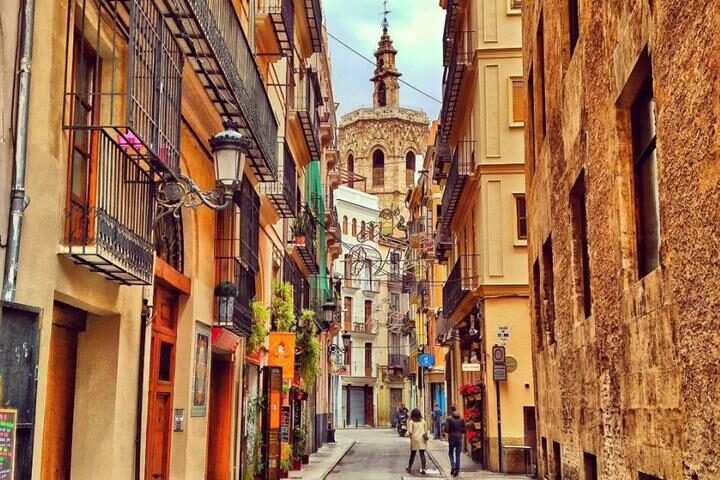
El Carmen blends historic architecture with a lively café and arts scene.
Ruzafa pulses with multicultural energy and creative businesses.
Benimaclet retains a village atmosphere within the city.
Attending local events, shopping at neighbourhood markets, and eating where locals eat creates a faster path to genuine integration than remaining within expat-only circles.
Exploring the city is straightforward thanks to public transport, cycling infrastructure, and a walkable city centre.
A practical overview of navigating the less polished aspects of Valencia life is available in the not-so-perfect paradise guide, and the noise guide covers what to expect acoustically before signing a lease.