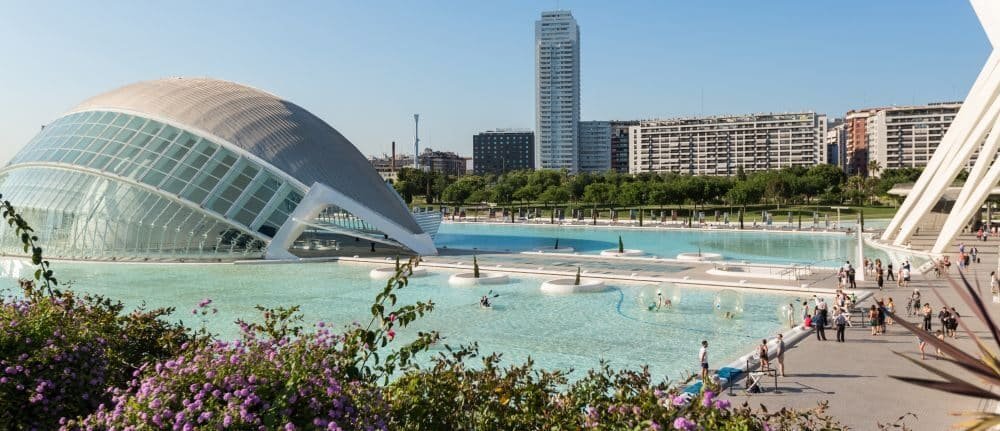
Valencia offers distinct neighbourhoods, each with its own character, and choosing where to live depends on your work patterns, budget, and tolerance for noise.
Remote workers have different needs from employees commuting to offices in the port area or the business district, while families prioritise schools and green space, and retirees want walkability and healthcare access.
No single neighbourhood suits everyone, but understanding the trade-offs helps you avoid expensive mistakes.
Ruzafa

Ruzafa sits south of the old town and has become the default recommendation for young professionals and digital nomads, largely because coworking spaces cluster here alongside restaurants, cafés, and bars that fill every street.
The neighbourhood attracts a mix of locals, expats, and tourists, creating an atmosphere that feels simultaneously vibrant and crowded depending on your perspective.
Flats tend toward the compact side, with older buildings dominating the housing stock, and interior apartments without natural light remain surprisingly common even at premium prices.
Rental prices have risen sharply over the past five years, and you should expect to pay a premium for anything with a balcony or exterior-facing windows.
Noise levels run high throughout the week, but Thursday through Sunday the streets stay busy until the early hours, which light sleepers and those with early morning client calls should factor into their decision.
The market and local shops make daily errands convenient, and metro access connects you to the rest of the city within minutes.
For more on getting around, see our guide to Valencia public transport.
El Carmen
El Carmen occupies the historic centre, where narrow streets, medieval buildings, and constant foot traffic define daily life for residents and visitors alike.
Tourists flock here year-round, and living in El Carmen means accepting a trade-off between atmosphere and practicality that not everyone finds comfortable.
Parking barely exists, deliveries become complicated, and many buildings lack lifts while featuring staircases steep enough to count as daily exercise.
Flats often have character but come with dated plumbing, limited storage, and quirks that estate agents describe as charming rather than problematic.
Night-time noise rivals Ruzafa and sometimes exceeds it, as bars and clubs operate late while sound carries through old stone walls with remarkable efficiency.
Professionals who work irregular hours or travel frequently may find El Carmen suits their lifestyle, but those needing a quiet, consistent workspace should look elsewhere.
Cánovas and Gran Vía
Cánovas, also referred to as the Gran Vía area, represents Valencia’s more established residential zone where flats tend to be larger and buildings from the mid-twentieth century offer higher ceilings and better natural light than what you find in Ruzafa or El Carmen.
Prices reflect this quality, but the neighbourhood attracts professionals, families with older children, and those who prefer a calmer environment without leaving the city centre entirely.
Transport links work well, shops and restaurants serve the area adequately, and social life exists but remains more subdued than in the nightlife-heavy areas closer to the old town.
For expats building businesses that require client meetings and a professional image, Cánovas offers proximity to the centre without the chaos that comes with living above a bar.
Our article on work-life balance in Valencia explores how location affects professional routines.
Cabanyal and Canyamelar
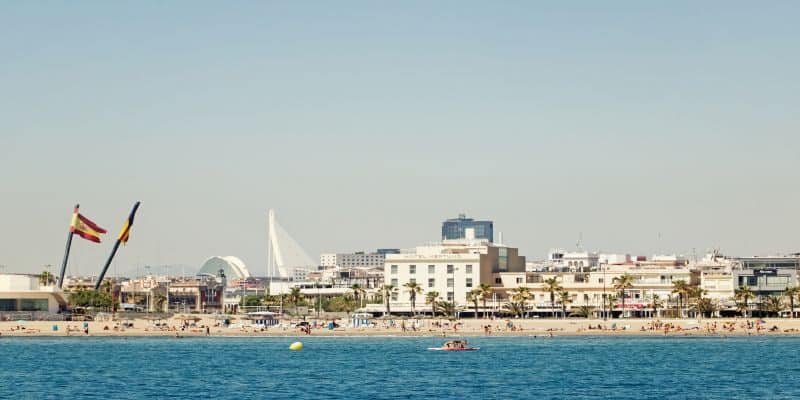
Cabanyal and Canyamelar stretch along the coast near the port, and these former fishing villages have retained much of their original architecture, with tiled façades and low-rise buildings creating a distinct character absent from other parts of the city.
Rental prices historically sat below those of central neighbourhoods, though the gap has narrowed as gentrification continues and new restaurants and coworking spaces appear alongside traditional taverns.
Beach access makes the area attractive to those who value outdoor activities, and the tram connects Cabanyal to the city centre in roughly fifteen minutes.
Professionals working remotely or with flexible schedules often find this area suits their needs, though commuters heading inland may find the journey less convenient than they anticipated.
Summer brings tourists and crowded beaches while winter offers quieter streets but fewer open establishments, so your experience will vary dramatically depending on the season.
Malvarrosa
Malvarrosa sits north of Cabanyal, directly on the beachfront, where residential blocks face the sea and the atmosphere feels more suburban than its neighbour despite the proximity.
Flats with sea views command higher prices, but properties one or two streets back remain more affordable and still offer easy beach access within a few minutes’ walk.
The neighbourhood appeals to those who prioritise beach access and quieter surroundings, with families and retirees making up a significant portion of residents while nightlife barely registers.
Transport connections exist but require more planning than central locations, though cycling along the beachfront provides an enjoyable alternative for reaching the city centre.
Benimaclet
Benimaclet began as a village and still retains some of that identity, sitting north of the city centre and bordered by the Polytechnic University, which brings students who mix with artists and long-term residents to create an eclectic community.
Rental prices tend lower than Ruzafa or Cánovas, and local shops, markets, and small restaurants outnumber chains, giving the area a reputation for community events and grassroots culture that attracts a certain type of resident.
Professionals seeking affordable housing without sacrificing character often land here, and metro connections make commuting straightforward for most destinations.
The main drawback involves distance from the beach and central attractions, which may leave those whose social and professional lives centre elsewhere feeling somewhat isolated.
Pla del Real and Mestalla
Pla del Real surrounds the Jardines del Real, one of Valencia’s largest parks, while Mestalla, named for the football stadium, sits adjacent and shares similar characteristics.
Both neighbourhoods offer a middle ground between central living and suburban calm, with flats tending toward family-sized in buildings from the 1960s and 1970s, though newer developments have appeared in recent years.
Green space access distinguishes this area, as running, cycling, and walking routes pass through the park and along the old riverbed, making it attractive to active residents.
Professional families with children often gravitate here because schools serve the area well, and for information on educational options, see our guide to international schools in Valencia.
Match days at the stadium bring traffic and noise that disrupts the usual calm, so factor this into your viewing schedule if considering properties nearby.
Monteolivete and the City of Arts and Sciences area
Monteolivete stretches along the old Turia riverbed near the City of Arts and Sciences, where modern apartment blocks replaced older housing stock in many sections during recent decades.
The neighbourhood attracts families and professionals seeking newer construction, with flats often including features rare in older areas such as air conditioning, lifts, and underground parking.
Proximity to the Jardí del Túria makes outdoor activities accessible, and cycling paths run the length of the old riverbed into the city centre for those who prefer two wheels to public transport.
The area lacks the street-level vitality of Ruzafa or El Carmen, and restaurants and bars exist but cluster in specific spots rather than spreading throughout the neighbourhood.
For those who prefer quiet evenings and functional living spaces over neighbourhood character, Monteolivete delivers exactly what it promises without pretending to be something else.
Patraix and Jesús
Patraix and Jesús sit southwest of the centre and remain predominantly local, with expat populations staying low compared to trendier areas and rental prices reflecting this relative obscurity.
Larger flats at lower costs attract families and budget-conscious professionals, while traditional markets, local bakeries, and neighbourhood bars define daily life in ways that feel authentically Valencian.
Integration into local culture happens more naturally here than in areas saturated with international residents, though Spanish language skills become considerably more valuable for daily interactions.
Metro and bus connections link both neighbourhoods to the centre with reasonable commute times, making them practical options for those prioritising authenticity over convenience.
Extramurs
Extramurs lies just outside the old city walls, adjacent to the historic centre, combining a central location with slightly lower density than El Carmen or Ruzafa and housing the Botanical Garden within its boundaries.
A mix of residential and commercial properties characterises the area, with flats varying widely from small studios to larger family units at prices sitting between the central premium zones and the more affordable outer neighbourhoods.
Walking distance to the centre appeals to those who dislike relying on transport, though noise levels depend heavily on the specific street since some pockets remain quiet while others border busy thoroughfares.
Nazaret
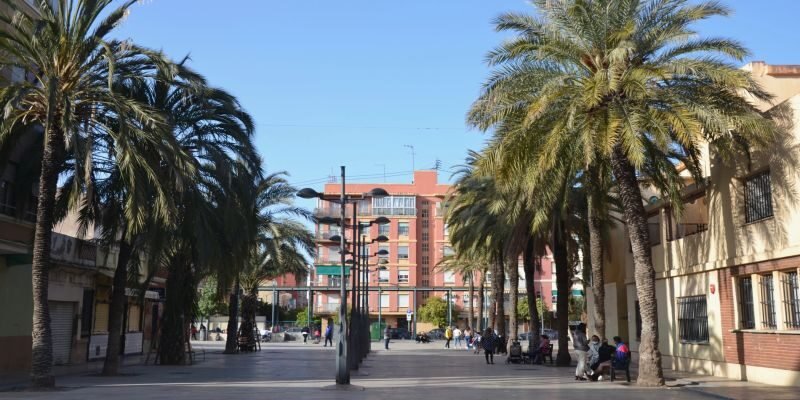
Nazaret represents one of Valencia’s most interesting emerging neighbourhoods, rapidly gaining traction amongst young professionals and creative industries while remaining largely unknown to the typical expat audience.
Art studios, coworking spaces, and creative workshops have established the area as something of a hub for those working in design, media, and related fields, offering an alternative to the more polished environments found in central Valencia.
Rental prices sit substantially below central areas while maintaining reasonable quality standards, making Nazaret attractive for professionals who prioritise space and value over location prestige.
The weekly Nazaret Market showcases fresh produce, handcrafted goods, and regional specialities, contributing to a local character that feels authentically Valencian rather than curated for international residents.
Port proximity creates employment opportunities in logistics, shipping, and related industries, making the neighbourhood practical for professionals working in these sectors rather than commuting from pricier central locations.
The area still lacks some of the café culture and polished infrastructure found in Ruzafa or Cabanyal, which suits residents seeking genuine neighbourhood life but may frustrate those expecting central-city conveniences at suburban prices.
Beyond the city: Torrent
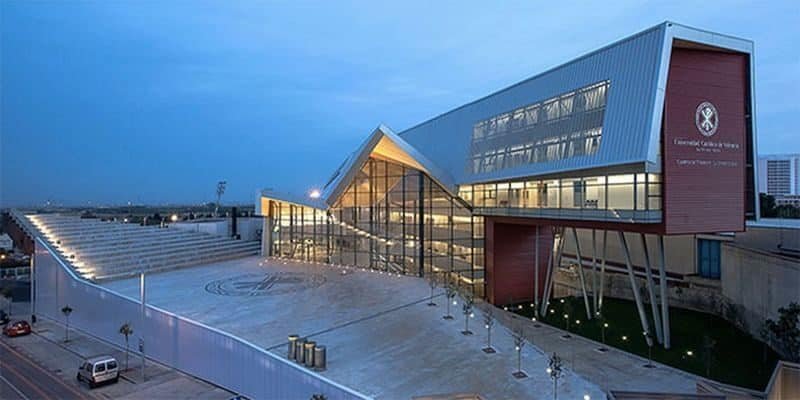
Torrent sits just beyond Valencia’s municipal boundaries and presents a compelling option for professionals seeking affordable housing without sacrificing accessibility to the city centre.
As one of the more competitively priced areas in the metropolitan region, Torrent appeals to those who want a quieter environment while maintaining proximity to work and essential amenities.
Several schools and a university campus make Torrent particularly suitable for professionals with families or those pursuing further education, and modern shopping centres alongside traditional markets cater to both daily necessities and leisure retail.
Sports facilities, parks, and cultural venues provide ample opportunities for recreation, creating a lifestyle that feels complete rather than requiring constant trips into Valencia for basic activities.
Commute times to central Valencia average twenty to twenty-five minutes by train and around thirty minutes by bus, with robust connections making the journey reliable enough for daily commuting.
Safe streets and well-regarded schools make Torrent particularly attractive for professionals with children, while lower housing costs and living expenses contribute to a more financially sustainable lifestyle than equivalent accommodation in Valencia would allow.
Beyond the city: Burjassot
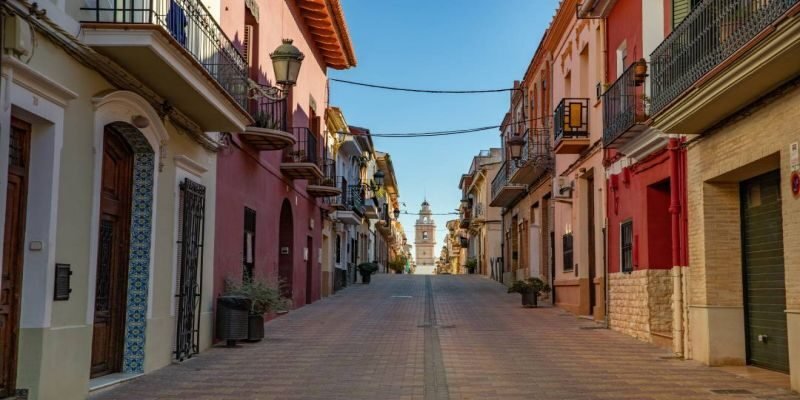
Burjassot sits just north of Valencia and has developed a strong reputation among expatriates seeking the balance between urban convenience and suburban calm that central neighbourhoods struggle to provide.
International schools make Burjassot particularly attractive for families with school-age children, while well-equipped hospitals and medical centres ensure healthcare access without travelling into the city for routine appointments.
Parks and open spaces create a quieter atmosphere than you find in Valencia proper, offering respite from urban density for those who value peaceful surroundings over street-level energy.
Commute times to central Valencia average fifteen minutes by train or twenty-five minutes by car, making Burjassot practical for professionals who need regular access to the city but prefer not to live within it.
A diverse international population has established itself here over the years, which facilitates easier integration for foreign residents compared to predominantly local neighbourhoods where Spanish fluency becomes essential for daily life.
Housing quality tends higher than equivalent price points in Valencia, and the overall lifestyle feels lower-stress for those whose priorities lean toward comfort and convenience rather than nightlife and cultural immersion.
Securing accommodation in Valencia
Valencia’s rental market has grown increasingly competitive, and securing decent accommodation at fair prices requires strategic planning combined with realistic expectations about what your budget actually buys.
Starting your property search at least three months before your intended move date allows sufficient time for thorough exploration, and platforms like Idealista and Fotocasa remain the standard resources for identifying available properties.
Local estate agents can provide access to unlisted properties and insider knowledge about specific buildings or landlords, though their services add costs that budget-conscious renters may prefer to avoid.
Negotiating rent remains possible, particularly when committing to longer tenancies or viewing properties that have sat on the market for extended periods without attracting tenants.
Living slightly outside the city centre substantially reduces rental costs while maintaining convenient access to business districts, and flatshares offer another route to affordability for those comfortable with shared living arrangements.
Rental prices fluctuate seasonally, with autumn and winter typically offering better value than the competitive summer months when students and tourists drive demand upward.
Joining expatriate groups and professional networks provides firsthand insights and housing recommendations that never appear on public listings, and spending time in prospective areas before committing helps ensure your choice aligns with how you actually want to live.
Factors worth considering
Noise tolerance
Valencia operates on a late schedule with dinner at ten, drinks until two, and street cleaning at seven, which creates challenges for anyone working standard European hours or serving clients in earlier time zones.
Proximity to nightlife becomes a liability rather than an asset under these circumstances, and interior-facing flats and higher floors reduce noise exposure but often sacrifice natural light in the bargain.
Transport needs
The metro system covers much of the city but leaves gaps that buses fill with varying reliability, while cycling works well thanks to flat terrain and dedicated lanes along the old riverbed.
Car ownership creates more problems than it solves in central areas because parking costs and restrictions make driving impractical for daily use.
Working from home
Remote workers need reliable internet, a quiet environment, and sufficient space for a dedicated workspace, but older buildings in central neighbourhoods may have connectivity limitations that newer developments in Monteolivete or the periphery avoid by including fibre connections as standard.
Coworking spaces provide an alternative but add monthly costs that should factor into your overall budget calculations.
Our article on remote working in Valencia covers this in detail.
Budget realities
Rental prices have increased across the city as demand from expats, students, and tourists drives competition for central properties, making realistic expectations essential for avoiding frustration.
Viewing flats outside your target area helps calibrate what your budget actually buys, and for current cost benchmarks, see our guide to Valencia living expenses.
Social priorities
Expat communities concentrate in certain neighbourhoods, with Ruzafa and Cabanyal having high international populations where finding English-speaking friends and services comes easily but integration with local culture requires more deliberate effort.
Neighbourhoods like Patraix or Benimaclet offer the reverse dynamic, with fewer expats meaning more opportunities to practise Spanish and build local connections that might otherwise take years to develop.
Making a decision
Spend time in different areas before committing by visiting on weekday mornings, weekend evenings, and during siesta hours, since each neighbourhood reveals different characteristics at different times.
Short-term rentals allow you to test locations before signing longer leases, and while the flexibility costs more initially, it avoids the expense and hassle of relocating after discovering your choice was poorly suited to your actual needs.
Valencia rewards those who take time to understand its rhythms, and choosing the right neighbourhood shapes your daily experience more than almost any other decision you will make.
For a broader perspective on expat life, see our article on the Valencia expat experience.