1Polyglot personality: why there are eight Mike Bastins
Ask Mike Bastin for a quote in French, then in English, then in Spanish. You will get three accurate answers under the same name, and still feel you have written to three different people. The tone shifts, the rhythm shifts, and so does the sense of humour.
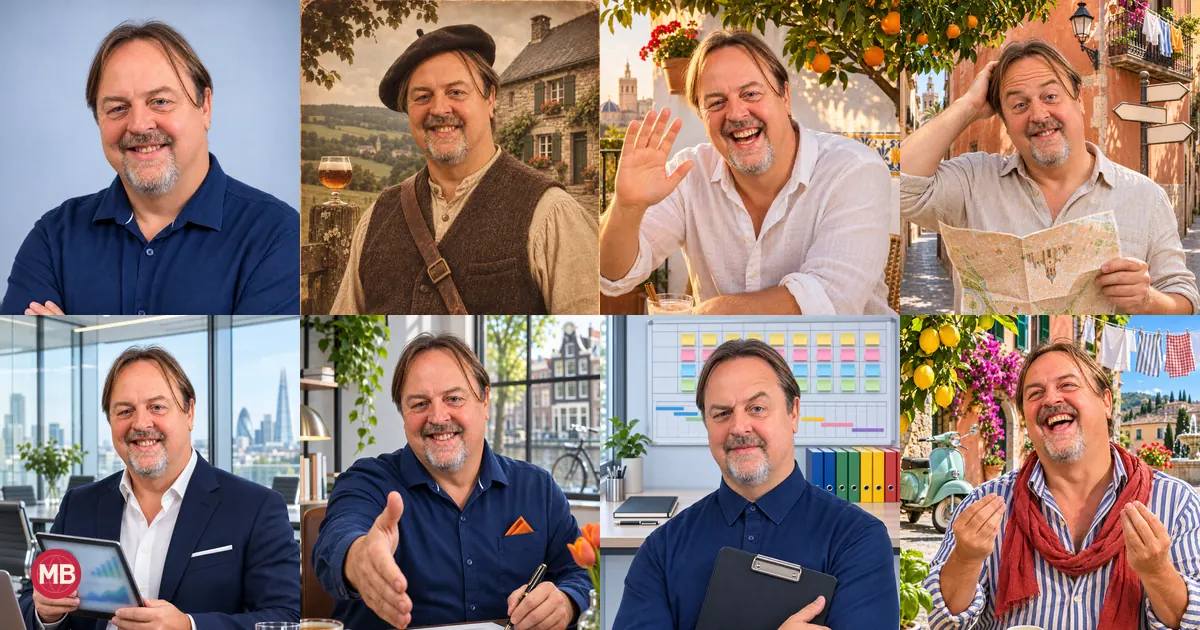
So, purely for fun, here are the eight Mikes you might meet, each with a portrait retouched with AI from a real photo. For every language you also get its back story: a school, a pioneer camp, a street in Charleroi full of Italians, a trip. And what the little game teaches any business that talks to its customers in more than one language.
2What the research says about polyglot personality and switching languages
Plenty of people who live across several languages report the same feeling, and linguists have studied it for years. Every language arrives with its own codes: how to say hello, how to say no, how to make a joke, how to close a deal. Switch language and you switch the rules of the game, and character follows.
Moving from their first language to their second, third and then fourth, participants felt progressively less logical, less serious, less emotional and increasingly fake.
Psychologists call it cultural frame switching: each language switches on the habits of the place where it was learnt and used. Mike picked his up at school, on the road, at work and on café terraces, which gives the eight portraits below.
3Where the languages come from: Mike's journey
Before the languages came curiosity. Mike collected stamps: a window on the world, a crash course in general knowledge, and a passion for geography and maps that has stayed with him ever since. He has also been a computer fan for as long as anyone can remember, and his first pay packet went straight on buying one.
Eight languages, in the order they arrived
Childhood and school
From early childhoodWalloon and French at homeWAFR
1983 and 1985A pioneer camp in the GDR, on the WerbellinseeDE
Age 12English and LatinEN
Age 14DutchNL
Age 15German, in place of LatinDE
Age 18A year in the United States, in WisconsinEN
Mons
1992 to 1997École d'interprètes internationaux, MonsNLEN
1994Three months of Erasmus in Utrecht, the NetherlandsNL
Final yearSpanish, a small optional courseES
Further afield
October 1999First stay in the Dominican Republic, until early January 2001ES
2000A course in CaliforniaEN
January to July 2001Costa Rica, in San José, the capitalES
July to December 2001Back in Belgium
2001An online travel agency devoted to Mexico, which took him thereDEES
December 2001 to July 2002Mexico, in Zamora, Michoacán, for the travel agencyES
2002 to 2016Back in the Dominican RepublicES
Valencia
August 2016Valencia, his cityESVA
Mike grew up in French-speaking Belgium, between French at home and the Walloon of his grandparents and his father. At 12 he started English and Latin. At 14 Dutch joined the line-up. At 15 he dropped Latin for German, which he studied for three years. Those three years of Latin, a dead language that is anything but silent, go some way to explaining his passion for languages and his openness to other people.
From 1992 to 1997 he studied at the École d'interprètes internationaux in Mons, now part of the University of Mons, and came away with a degree in translation, with three languages on the syllabus: Dutch, English and French. Spanish only turned up at the very end, as a small optional course: all the way through his degree, Mike had wanted to move to a Spanish-speaking country, so he picked up the language as his ticket out. The rest arrived with life: a pioneer camp in East Germany, a street in Charleroi full of Italians, a German business partner, a course in California, friends, in-laws and plenty of travel. Every language comes with its own places and its own people, and they are what give each one its personality.
Mike also worked as a marketing manager in the Dominican Republic and in Costa Rica. As soon as he had truly learnt SEO, he launched his own ventures as a freelance translator and SEO consultant, mikebastin.com among them, while building the BeTranslated agency. Today he edits sites and runs their search as well, Matosurf and ValenciaMove included.
Over the years Mike has built more than fifty websites and translated as many again. Every one of these languages has helped him launch or translate real sites, from tourism to property. Read it as a CV and the technical thread shows: setting up telephony solutions, technical support and sorting out billing problems, then SEO, from Dominican estate agencies to the sites he edits today.
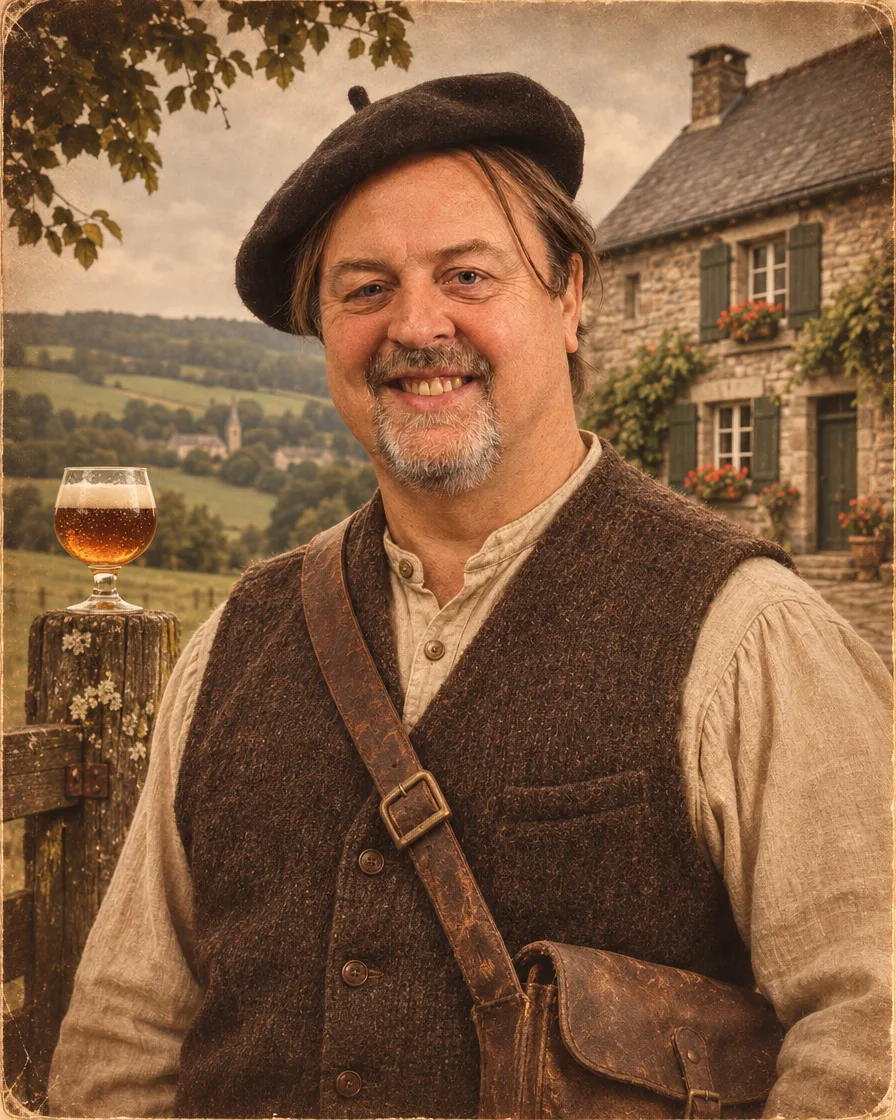
The Walloon Mike: beret, waistcoat, sepia. Portrait retouched with AI from a photo of Mike Bastin.
Where this Mike comes from
Mike has heard Walloon since he was tiny: his grandparents and his father spoke it to him, while French stayed the language of the home.
When Mike goes back to Belgium and speaks Walloon, he finds a traditional, historic version of himself. He becomes a Mike from another century, and his family recognise him straight away.
His favourite ground
The trip back home
Where it comes from
The Belgium of yesteryear
SoundtrackWilliam Dunker, "Trop tchaud", in Walloon.
William Dunker, "Toudis su'l voy (Trop tchaud)", video posted by the El_cricko_gaming channel.
02In French, Mike is himself
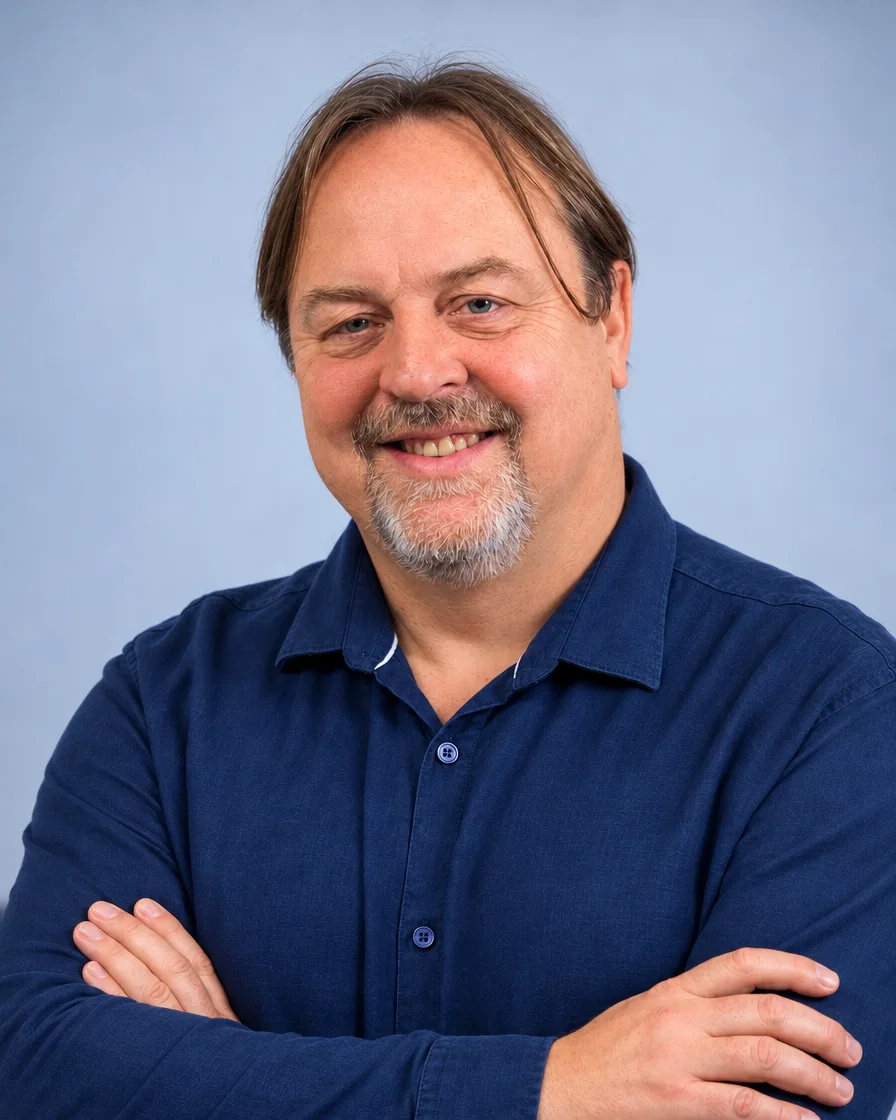
The French Mike: at ease, arms folded. Portrait retouched with AI from a photo of Mike Bastin.
Where this Mike comes from
French has always been the language of the home, then of school, and then of the translation degree he earned in Mons.
Four or five holidays in Bordeaux trained him to reach for the words used in France by reflex and to hunt down Belgicisms. For a translator it counts: most of his clients work in French, and as a Belgian, Mike checks his French against the French of France.
French is his mother tongue, the one he thinks in before he speaks. Here you get the full Mike: he qualifies, he wanders off on a tangent, he slips in a reference and finds his way back to the point. Expect dry irony and a fondness for exactly the right word. When a question is delicate, he asks it in French.
His favourite ground
The conversation that takes its time
Where it comes from
Mother tongue, Belgium
SoundtrackStromae, "Alors on danse", a Belgian who gets the whole planet dancing.
Stromae, "Alors on danse" (official video), on the artist's official channel.
The unretouched photo, for comparison, sits in the Who is writing? box.
03In English, Mike talks business
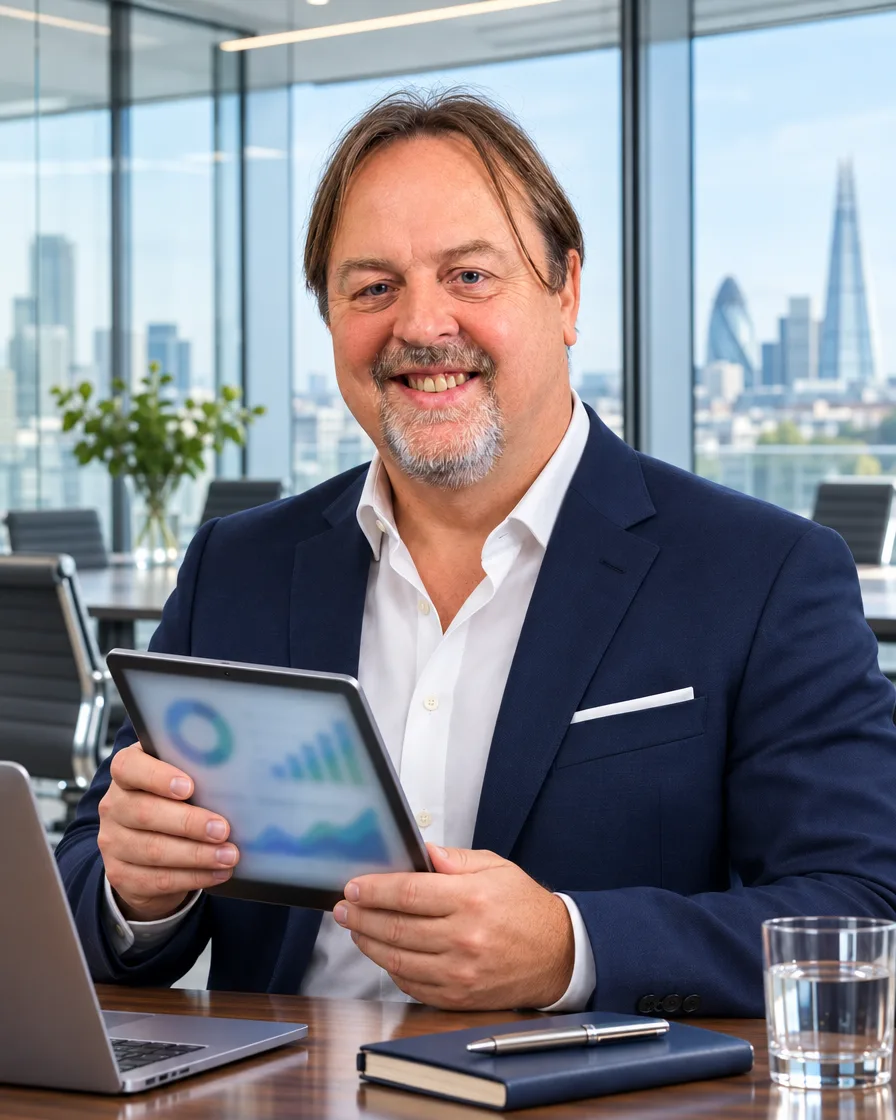
The English Mike: blazer, tablet, agenda. Portrait retouched with AI from a photo of Mike Bastin.
Where this Mike comes from
He started English at 12, then had it shaped across the Atlantic: a year in the USA, several trips back to Texas and American friends dotted about everywhere. In 2000 he took an affiliate marketing course in California: a long time ago, but there it is. American stand-up plays on a loop at his place, and John Mulaney, Bill Burr, Jim Gaffigan and Dave Chappelle, at our best guess, are all in the rotation.
Now for the twist. Mike has been to London exactly once, for three days at 19, a year after a school-trip day out in Bournemouth at 18. British English stayed a complete mystery to him until he moved to Spain, where Brits far outnumber Americans and he finally got his ear in. And the English version of this site, the one you are reading right now, is written in British English. Cheers for bearing with him.
English is his working language for international clients. Sentences get shorter, an agenda appears, and every meeting ends with action points and dates. The English Mike heads straight for the outcome and has the minutes in your inbox within the hour.
His favourite ground
The thirty-minute meeting
Where it comes from
His degree, a year in the USA
SoundtrackDua Lipa, "Houdini", the art of vanishing the moment the meeting ends.
Dua Lipa, "Houdini" (official video), on the artist's official channel.
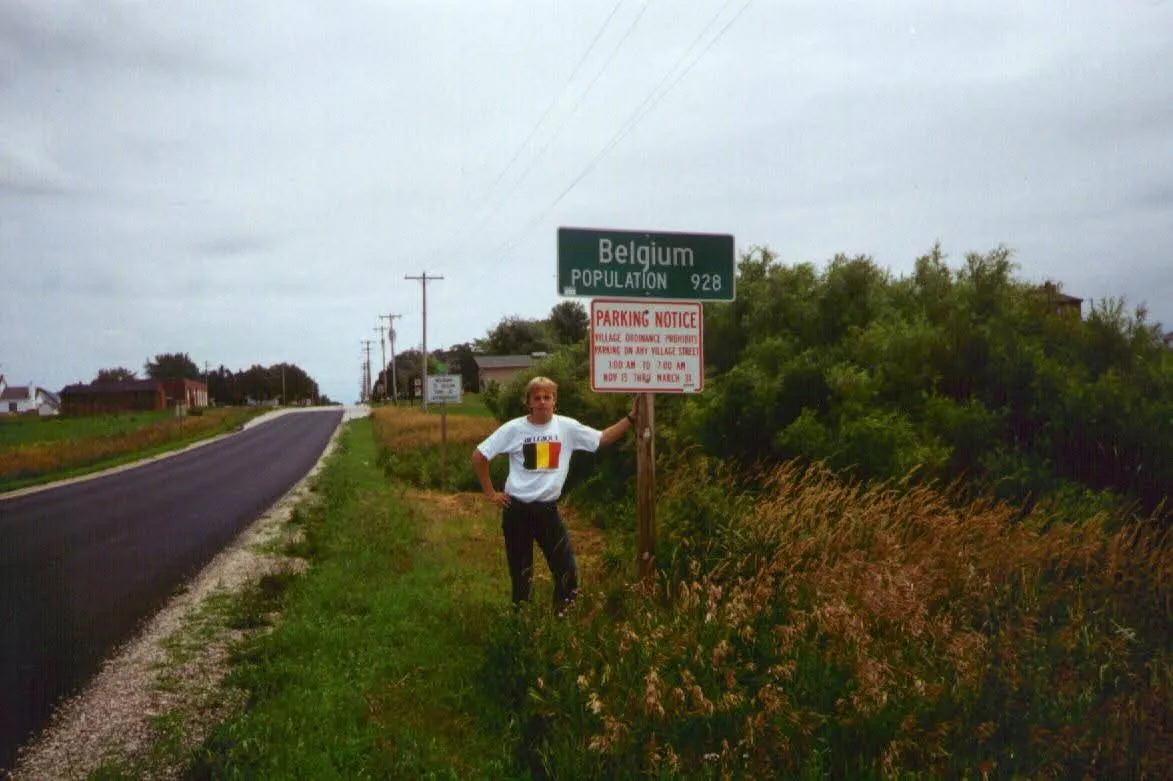
During his year in the United States, Mike went to visit the town of Belgium, in Wisconsin, in the summer of 1992. He posed next to the town sign in a Belgian-flag T-shirt for a souvenir photo.
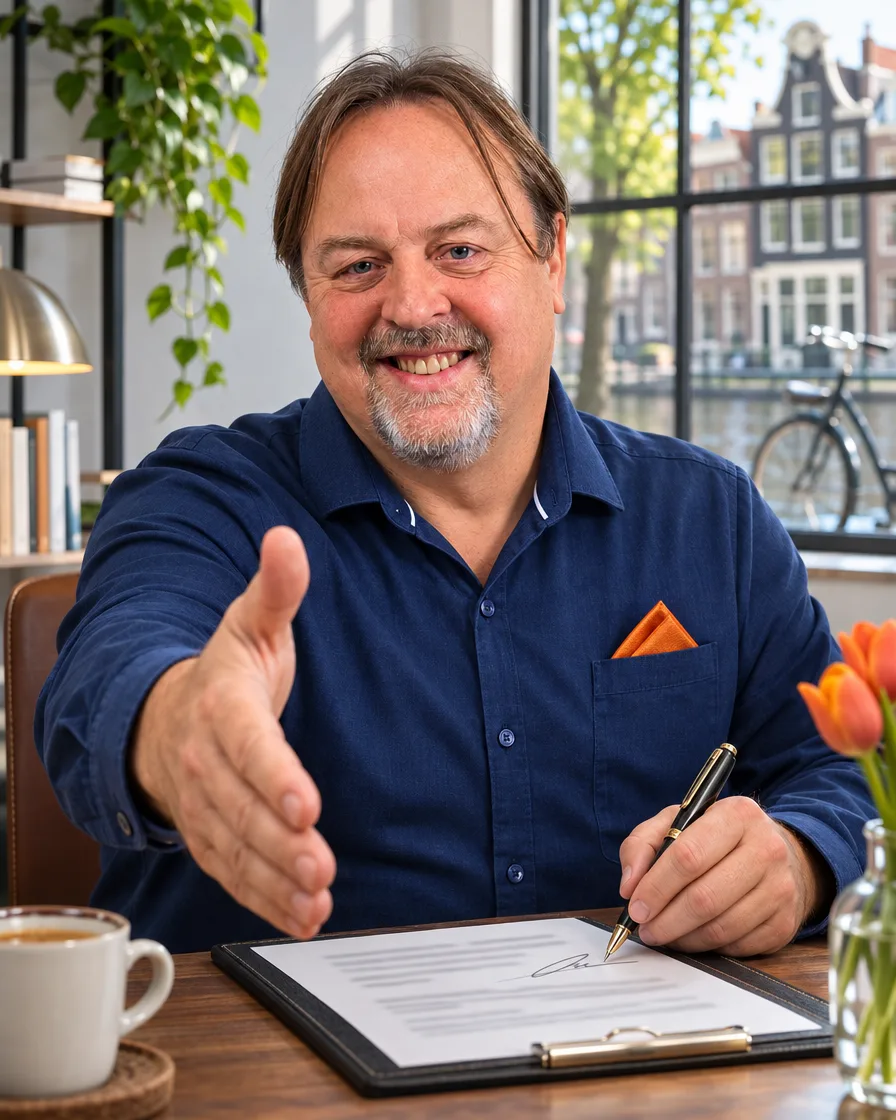
The Dutch Mike: hand out, contract ready. Portrait retouched with AI from a photo of Mike Bastin.
Where this Mike comes from
Dutch arrived when he was 14 and carried on at university, with three months of Erasmus in Utrecht, in the Netherlands, in 1994. He then spent three years working as a pyrotechnician, mostly in Flanders, where his language skills mainly served, he says, to lose money. What he kept from it is a real soft spot for fireworks and a well-tuned ear for a Flemish conversation.
Dutch is a trading language, direct and practical. Mike names the price by the second sentence, answers yes or no, and expects the same frankness back. Dutch-speaking clients love it: the conversation is short and the deal is clean.
His favourite ground
The clear offer, price up front
Where it comes from
His degree, Erasmus in Utrecht, Flanders
SoundtrackMarco Borsato, "Dromen zijn bedrog".
Marco Borsato, "Dromen zijn bedrog", on the Universal Music Nederland channel.
Mike also spent a year in customer service at Mobistar (now Orange), a Belgian telecom operator. Giving technical support put him in front of a huge range of accents. He also looked after VIPs and key accounts, setting up their telephony solution and solving their technical and billing problems, which is where his geek side shows.
05In German, Mike is organised
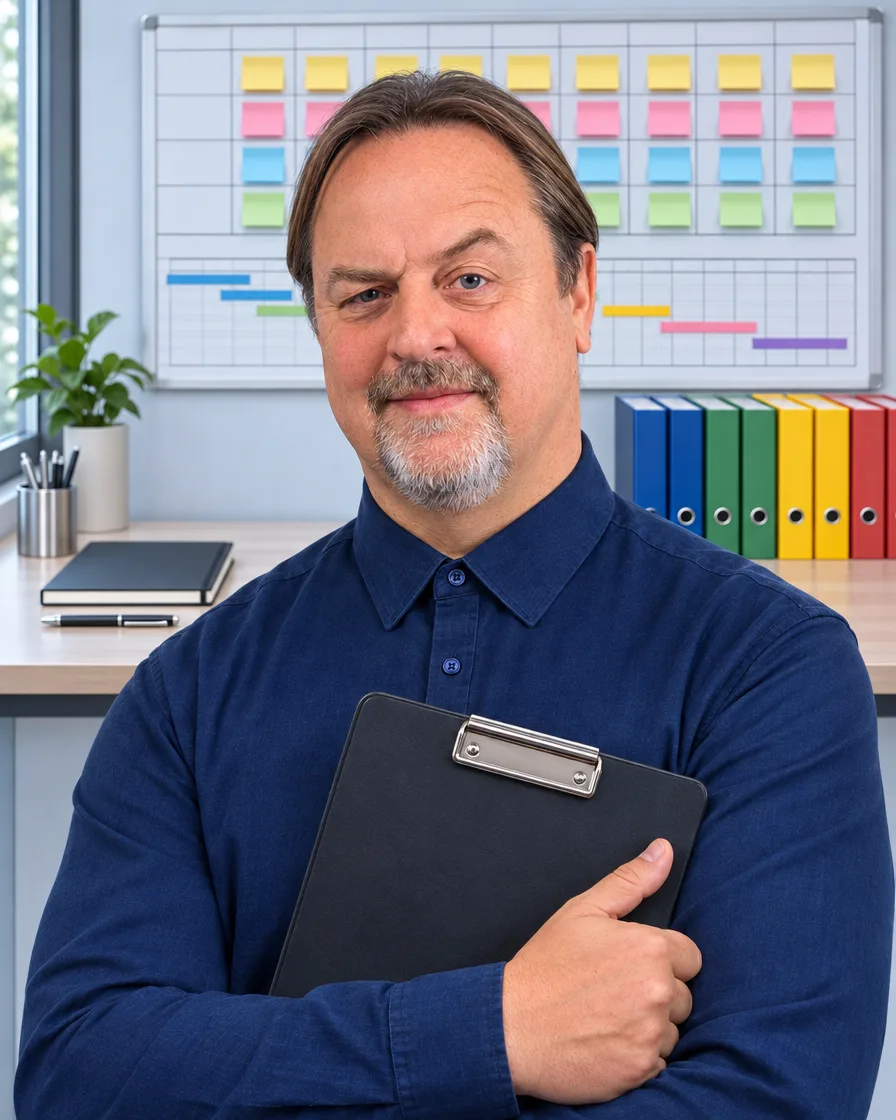
The German Mike: binders in a row, the plan on the wall. Portrait retouched with AI from a photo of Mike Bastin.
Where this Mike comes from
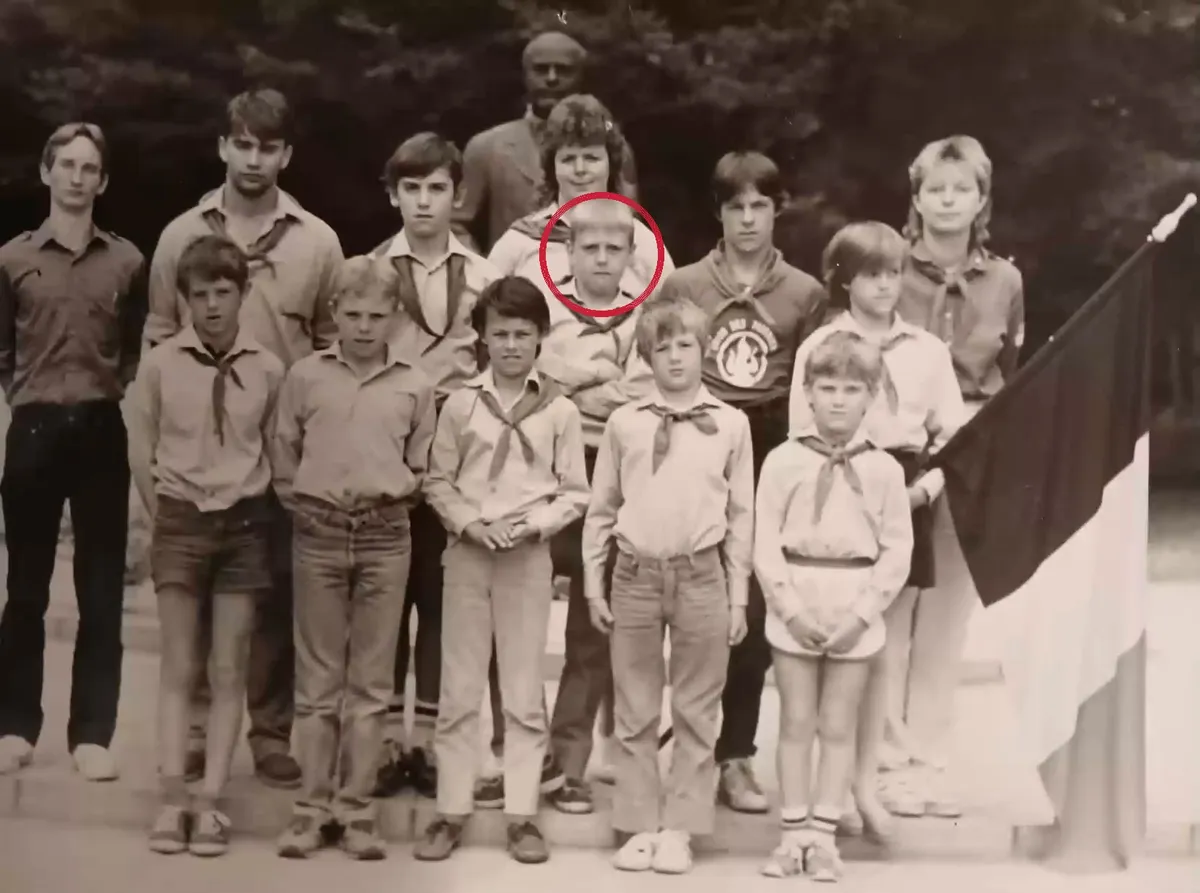
German was his very first brush with a foreign language, back in 1983 and 1985, when he was a pioneer at the Pionierrepublik Wilhelm Pieck, the GDR's central pioneer camp on the shores of the Werbellinsee. At 15 he swapped Latin for German, which he studied for three years. Years later he teamed up with a German business partner to launch an online travel agency in 2001, devoted to Mexico, and German became an everyday working language. Today his best friend lives in Munich, and Mike pops over to see him often.
In the photo, the blonde young woman on the far right was the camp's German-French interpreter. Watching her work, Mike decided he wanted to become an interpreter one day: he found her job fantastic. Speaking the language of others and carrying it across aloud was his first real exposure to a foreign language, and that language was German.
In German the verb waits until the end of the sentence, and Mike waits until everything is structured before he speaks. He numbers his points, checks the dates twice and turns up early. He runs SEO projects in German, and the sales copy goes to our native writers.
His favourite ground
The plan, the steps, the dates
Where it comes from
The GDR, a business partner, a friend in Munich
SoundtrackRammstein, "Ich will", drilled to the millimetre.
Rammstein, "Ich will" (official video), on the band's official channel.
Group photo from a pioneer camp in the GDR, in the 1980s. Mike is the blond boy circled in red, in the middle, in front of his mother and the statue. On the far right, the camp's German-French interpreter.
A small ironic note: to keep his German in shape, Mike listens to Rammstein, which, for a former pyrotechnician, at least has the merit of consistency.
06In Spanish, Mike is sociable
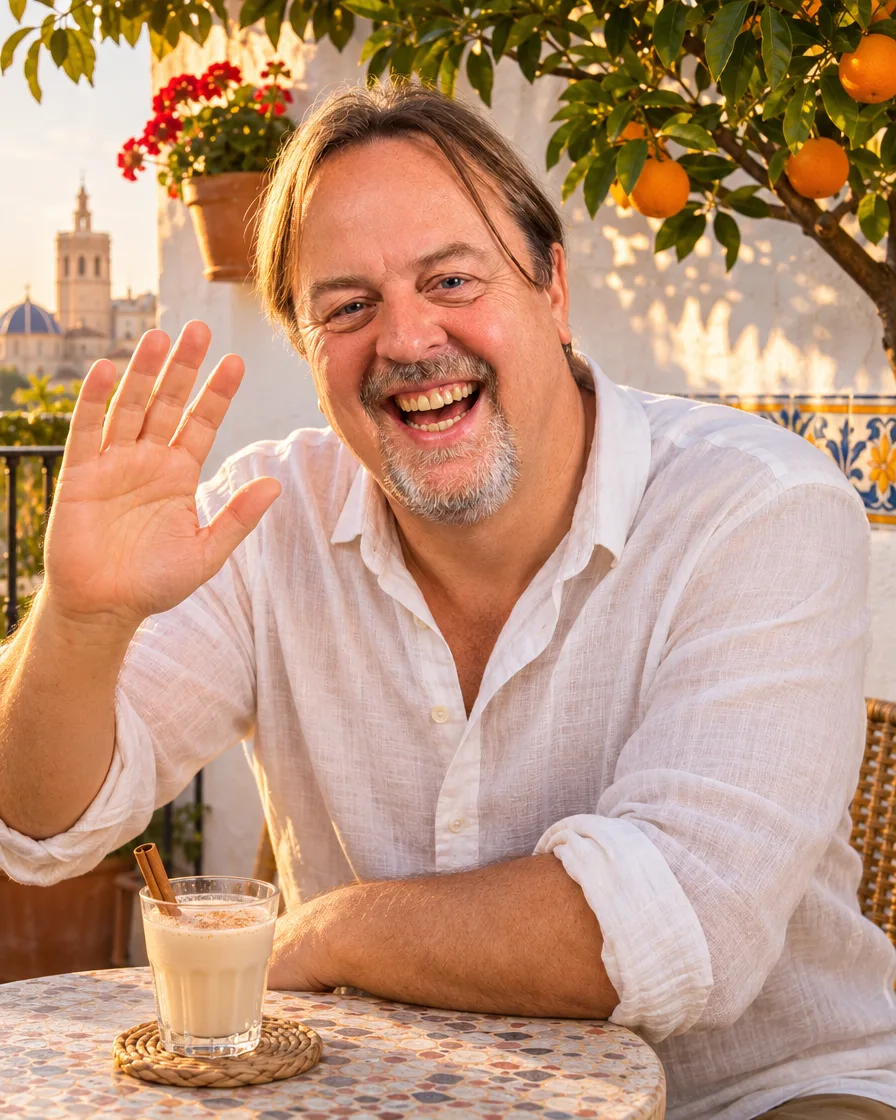
The Spanish Mike: a terrace, a glass of horchata and a big wave. Portrait retouched with AI from a photo of Mike Bastin.
Where this Mike comes from
Mike took up Spanish at the very end of his studies, as a small optional course, because all the way through his degree he had his heart set on a Spanish-speaking country.
He went far. From October 1999 he lived in the Dominican Republic, between Sosúa, Cabarete and Santiago, then spent six months in Costa Rica in 2001, in San José, the capital. After a return to Belgium he spent December 2001 to July 2002 in Mexico, in Zamora, Michoacán, before going back to the Dominican Republic in 2002: sixteen years there in all, with trips right across Central America. Since August 2016 he has lived in Spain, in Valencia, the city he calls home.
Based in Valencia, Mike lives in Spanish every day, and the language has made him quicker to switch to first names, to laugh and to suggest a coffee. A meeting in Spanish opens with news of the family and often ends over lunch. Voice notes take the place of emails, and business moves along very nicely that way.
His favourite ground
The terrace and the voice note
Where it comes from
Final year of his degree, then the Dominican Republic, Mexico, Costa Rica
SoundtrackJuan Luis Guerra, "El Niágara en bicicleta", in which Niagara Falls gets crossed by bike.
Juan Luis Guerra 4.40, "El Niágara en bicicleta" (live version), on the artist's official channel.
In the Dominican Republic, Mike also did SEO for a long list of real-estate agencies: resorts, apartments and sports clubs, including Sea Horse Ranch, Century 21 Cabarete and Century 21 Perdomo. Spanish became a working language there as well as a holiday one.
Mike loves salsa, merengue and bachata, the soundtrack of his Dominican years.
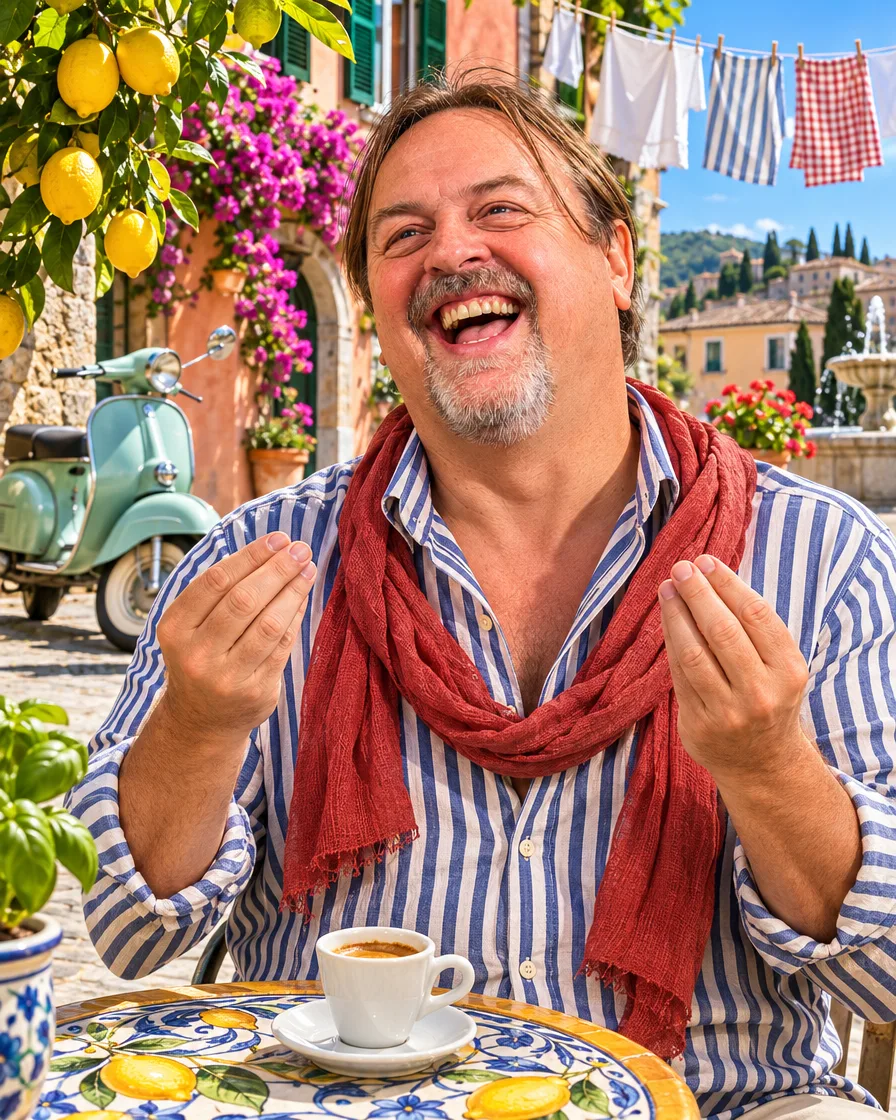
The Italian Mike: both hands in the air, cliché fully embraced. Portrait retouched with AI from a photo of Mike Bastin.
Where this Mike comes from
Mike grew up surrounded by Italians: his street in Charleroi was full of Italians from one end to the other, with names like Filippo, Fabrizio and Tony. A street like that explains his attachment to "Les Ritals" by François Cavanna, the story of a childhood among Italian immigrants and one of his favourite books for as long as he can remember. Fabrizio, the character comedian Damien Gillard plays in "Le Grand Cactus" on Belgian public broadcaster RTBF, really reminds Mike of the Fabrizio of back then: see Fabrizio at the Charleroi market. At university he went out with a student of Italian, and later had an Italian stepfather for a few years, which meant holidays lasting several weeks down south, near Lecce. Today his friends Peppo, Paolo and Pier-Paolo keep the Italian flowing, and his colleague Annalisa speaks Italian every day, so Mike hears it daily.
Italian is the language where Mike lets himself go the most. The volume goes up, the hands join in, and every sentence sounds as if it is ordering an espresso. He knows it is a cliché and enjoys it all the more: in Italian, Mike plays the Italian everyone pictures, and the people he talks to answer with a smile.
His favourite ground
The hands, above all the hands
Where it comes from
The street, the family, the friends
SoundtrackEros Ramazzotti, "Più bella cosa".
Eros Ramazzotti, "Più bella cosa" (official video), on the artist's official channel.
08In Valencian, Mike lets himself be guided
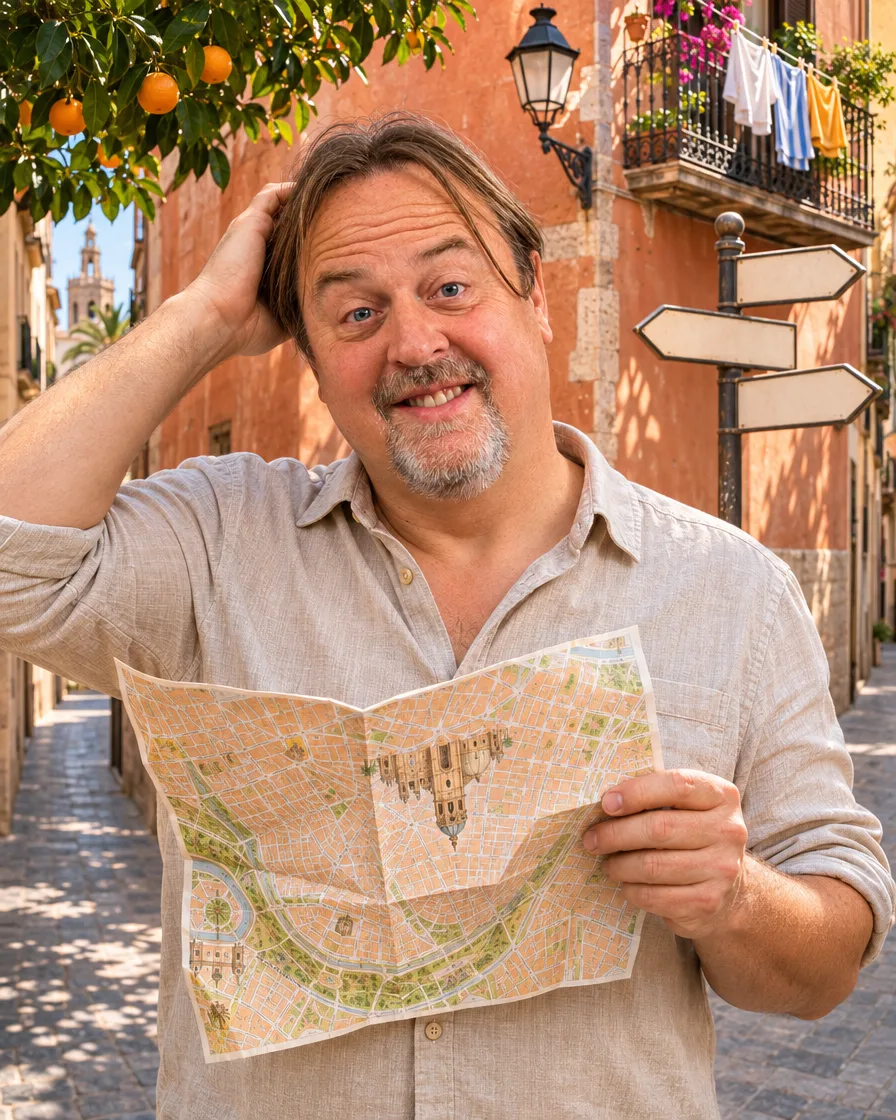
The Valencian Mike: map upside down, words gone walkabout. Portrait retouched with AI from a photo of Mike Bastin.
Where this Mike comes from
Valencia is also the scene of his great love affair with noise. The mascletàs on the Plaza del Ayuntamiento and the Fallas every March remind him of his old job as a pyrotechnician (the back story is in the Dutch portrait), and on a fiesta day he happily gets lost in the lanes of the old town, the better to follow the din. For a man who loves maps, the irony is hard to miss.
Valencian is the language of the city he lives in, and the one where Mike feels most like a tourist. He hunts for his words, smiles apologetically and lets a map lead the way, occasionally the wrong way up. Valencians appreciate the effort and answer him with great patience, usually in Spanish.
His favourite ground
The crossroads in the old town
Where it comes from
Valencia, his city for over ten years
SoundtrackZOO, a Valencian band, "Tobogan".
ZOO, "Tobogan" (album Llepolies, 2021), on the band's official channel.
6Kitesurfing and windsurfing in the Dominican Republic, with Matosurf
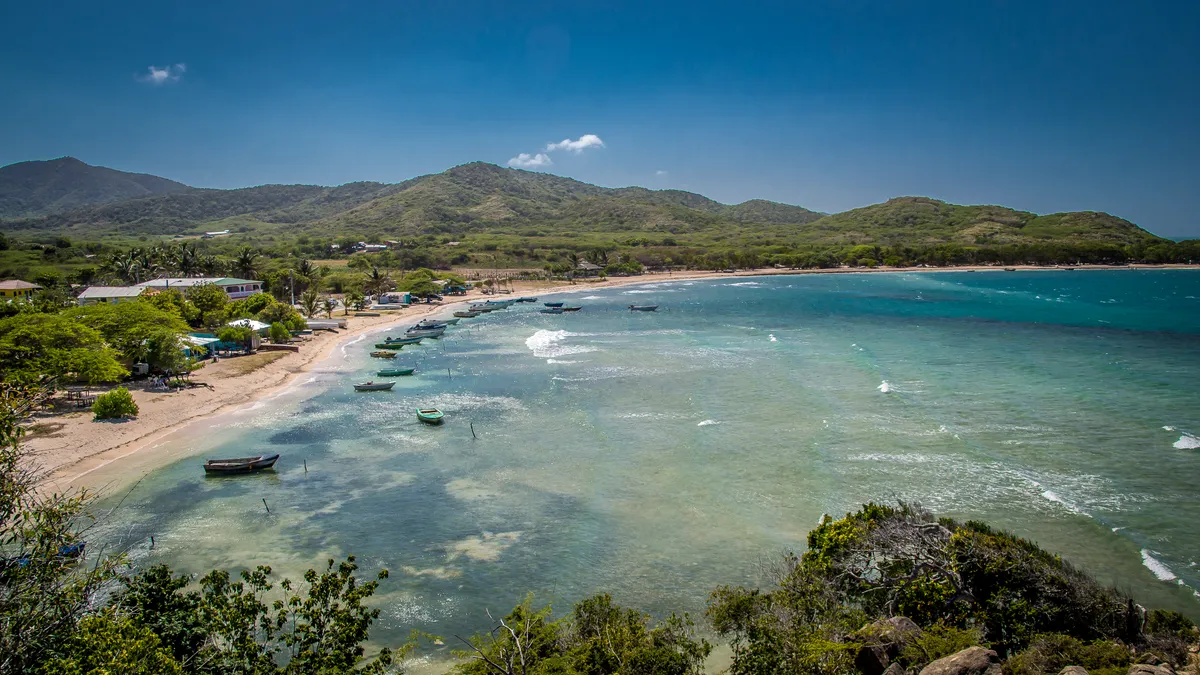
Mike used to kitesurf at Buen Hombre, a flat-water lagoon closed off by a coral reef in the island's isolated north-west.
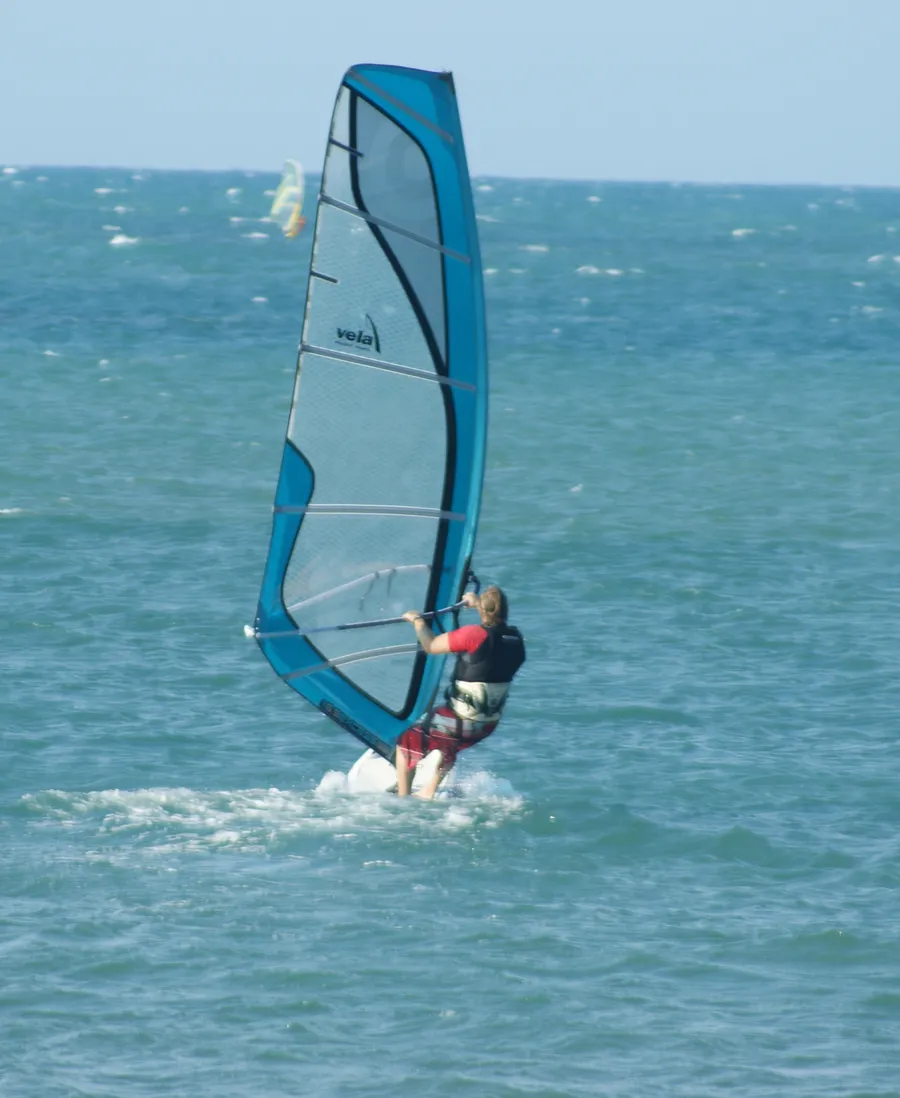
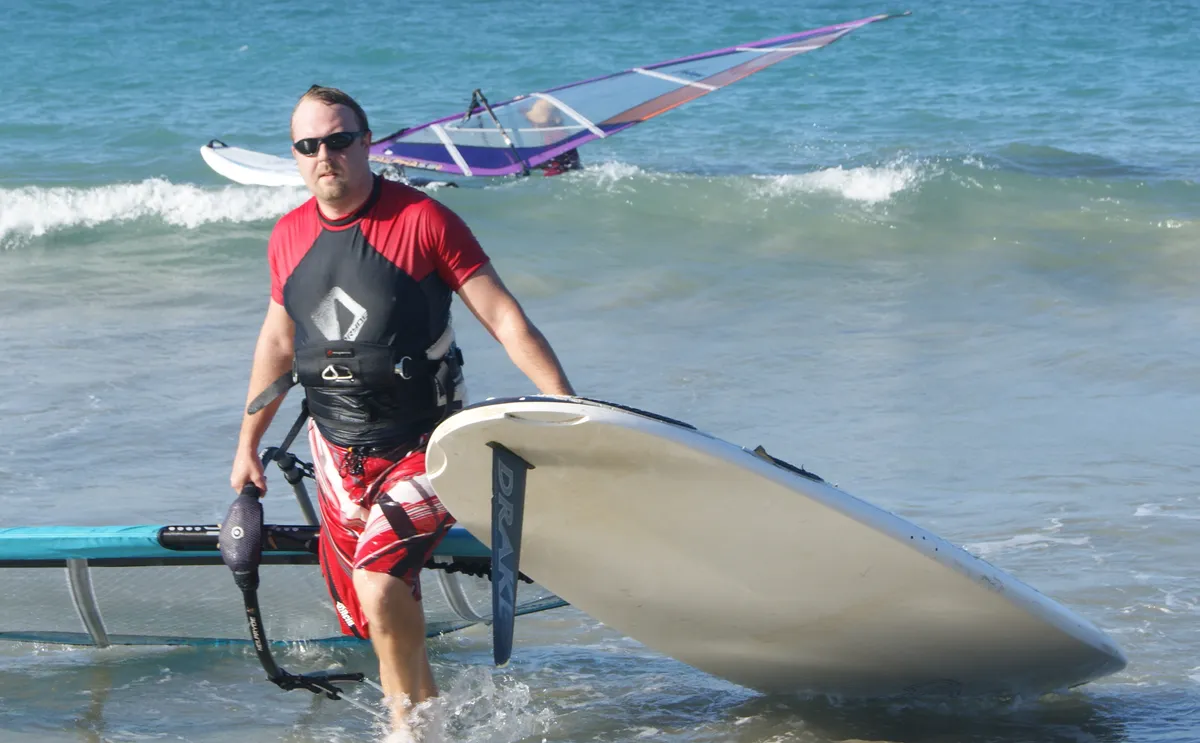
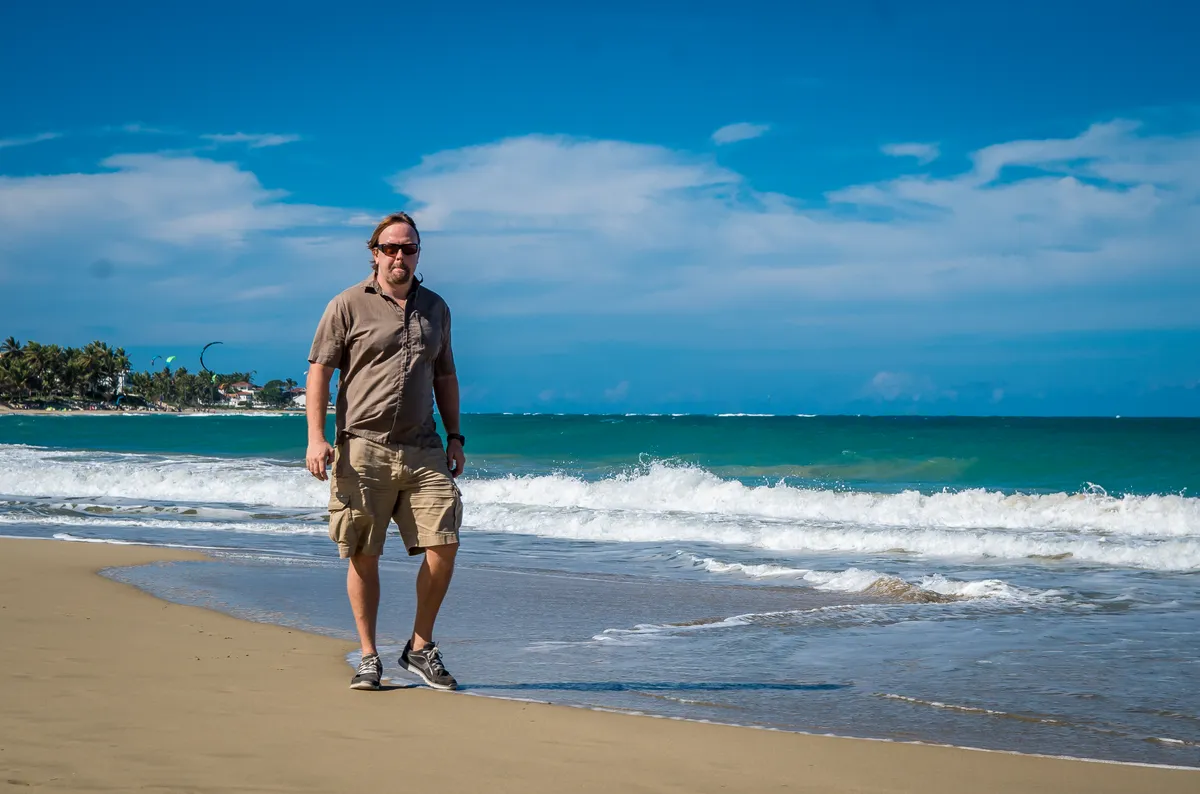
He is also an amateur windsurfer at Cabarete, one of the best-known kitesurfing destinations in the world. Each of the two spots has its own page on Matosurf.
Swipe to see all five photos.
The flat-water lagoon at Buen Hombre, for kitesurfing in the Dominican Republic. Photo: Olivier Moro.
Mike Bastin in the middle of a windsurfing session.
Mike Bastin, amateur windsurfer, back from a session at Cabarete.
Mike Bastin on the beach at Cabarete, a kite on the horizon. Photo: Olivier Moro.
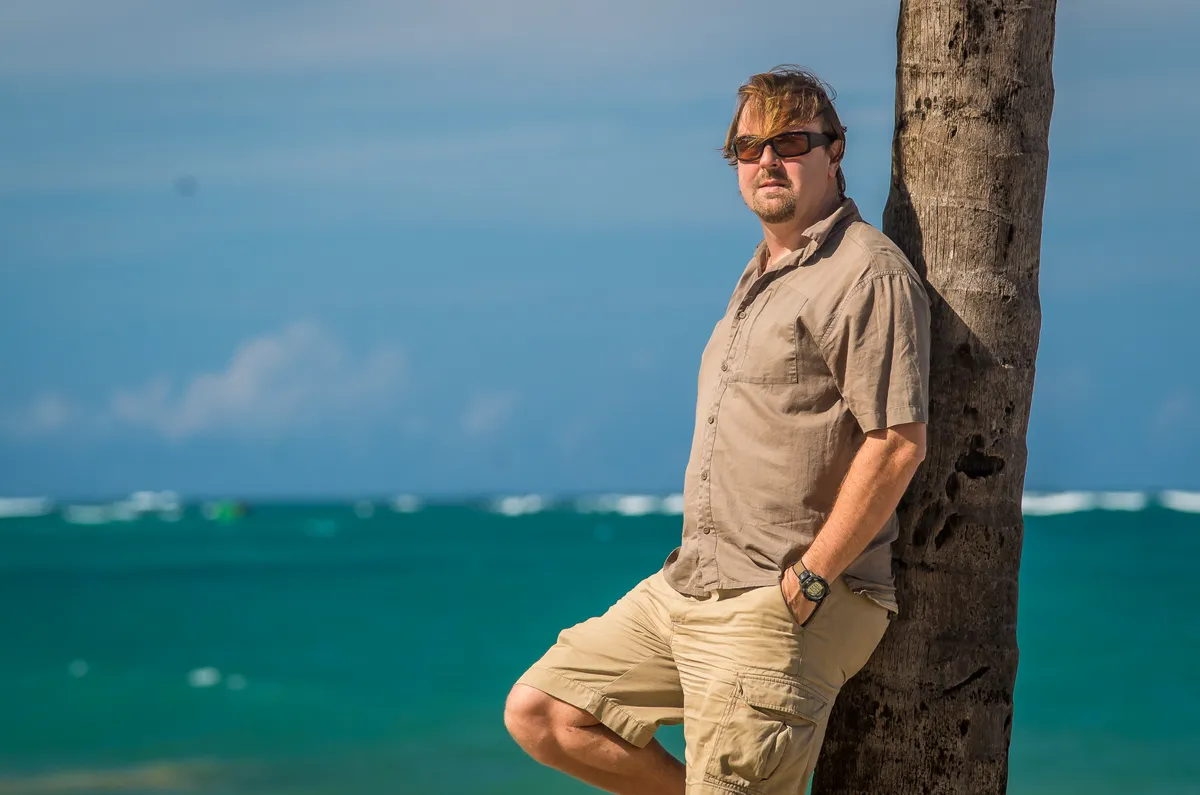
Mike Bastin, leaning on a palm tree at Cabarete. Photo: Olivier Moro.
7What the eight Mikes teach a multilingual website
Your business goes through the same thing as Mike. A brand that jokes in French does well to be more direct in Dutch and warmer in Spanish, while staying recognisably itself. Here lies the gap between adaptation and translation: the values stay put, and the way of saying them follows the market.
Three pointers for your pages:
Keep the substance, adapt the delivery. Your promise is the same everywhere; the example, the anecdote and the sign-off change with the reader.
Have each language written by someone who lives in it. The right tone comes from knowing the market, just as Mike's Spanish comes from Valencia.
Review your calls to action market by market. A button that wins people over in Brussels is worth rewording for Madrid or Amsterdam.
Try it at your next meeting: note which language makes you funniest, most precise, most persuasive. Your customers have the same experience reading your website. Give each version the personality that suits it, and every market will feel you are talking to them.
See what multilingual lead generation looks like on your site
We start with a thirty minute call on your markets, what already ranks and what has already been tried. Questions come before recommendations, and what comes back afterwards is a written scope naming real pages and deliverables.
We keep a small record in your browser of your choices and your theme. Anything beyond that, such as audience measurement or embedded content, stays off until you allow it. Privacy and cookies